
Engineering Green Space: The Mechanics of Vertical Gardening
We observe a distinct shift in how urban dwellers approach horticulture; the constraint of flat, horizontal space necessitates vertical solutions. This is not merely an aesthetic choice but an engineering challenge regarding substrate management, water retention, and structural load distribution. Mastering living walls urban gardening requires understanding plant physiology interacting with architectural constraints. The goal becomes optimizing photosynthetic surface area within a limited footprint, demanding careful consideration of substrate depth and root system architecture.
The fundamental mechanism at play involves maximizing the surface area exposed to light while managing the hydrological cycle. A vertical setup changes how water moves through the system compared to traditional ground-level planting. Gravity dictates flow downward, meaning proper irrigation design must account for runoff potential and ensure consistent moisture delivery to all plant strata. We are essentially creating a controlled microclimate where environmental variables—humidity, temperature fluctuation, and light intensity—are manipulated by the structure itself.
Structural Considerations for Load-Bearing Systems
Before any planting commences, the structural integrity of the support system must be rigorously assessed. Whether utilizing modular panel systems, vertical planters attached to façades, or custom-built trellises, the load placed upon the wall material needs precise calculation. We look at the weight of saturated soil and plant biomass as dynamic variables. Ignoring this physics leads directly to structural failure or compromised façade stability.
When designing a system, we must analyze the anchor points against the wall’s capacity. For exterior installations, exposure to wind shear introduces another variable; the system must be engineered to resist lateral forces without compromising the growing medium. This involves selecting appropriate mounting hardware and ensuring proper substrate weighting to maintain equilibrium. In practice, this requires collaboration between horticultural knowledge and basic civil engineering principles.
Substrate Science for Vertical Environments
The choice of growing medium is arguably more critical in vertical systems than in traditional container gardening. Because water delivery and aeration are managed differently when roots span multiple planes, the substrate must possess specific porosity and drainage characteristics. Dense, poorly aerated soil promotes anaerobic conditions, suffocating the fine root hairs necessary for nutrient and water uptake.
We find that lightweight, mineral-rich mixes perform best. Incorporating materials like perlite or expanded shale into the growing medium increases pore space, allowing oxygen diffusion to reach the entire root mass efficiently. This addresses the core constraint of vertical gardening: ensuring every root receives adequate gaseous exchange. When dealing with hydroponic or semi-hydroponic vertical systems, the substrate choice becomes even more acute, demanding precise control over nutrient solution saturation and root exposure. Consider how this impacts the nutritional uptake discussed in guides on container density; optimizing root access is paramount for maximizing biomass production.
Maximizing Plant Potential Through Trellising Techniques
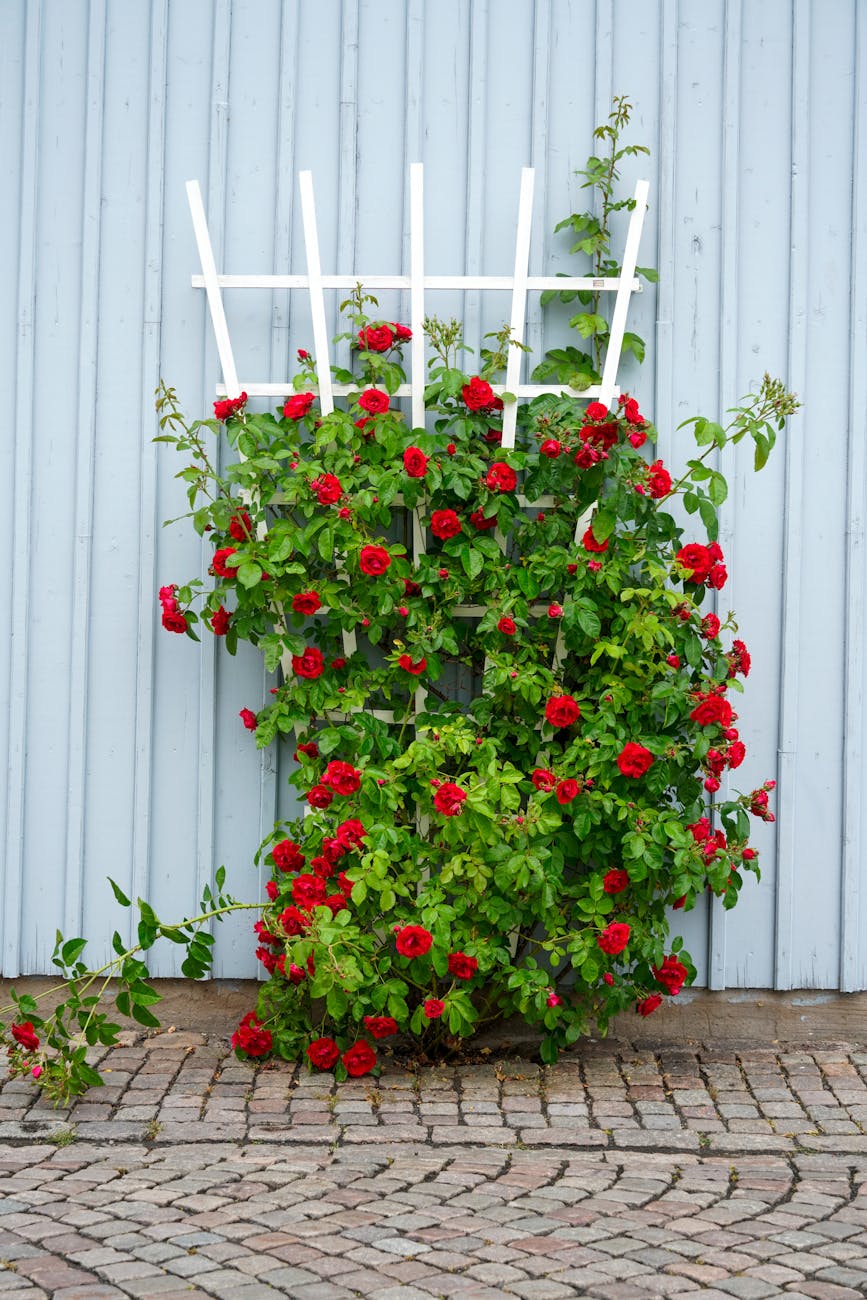
Trellises provide the essential framework that translates vertical ambition into tangible growth pathways. They serve a dual function: providing physical support and creating the necessary scaffolding for vines or climbing plants to establish robust, self-supporting structures. The mechanism here is direct physical guidance; it overrides the plant’s natural tendency to sprawl horizontally, forcing vertical energy expenditure.
The design of the trellis itself dictates the subsequent growth pattern. A simple grid system allows for uniform spacing, which promotes evenly distributed light exposure across all plants. Conversely, an asymmetrical or organic trellis shape encourages specific focal points and cascading effects, transforming a flat surface into a dynamic, multi-layered visual experience. We see this effect repeatedly when studying vine propagation; the physical constraint triggers phototropic responses that favor vertical elongation over lateral spread.
Integrating Trellises with Living Walls
When combining the principles of living walls with trellising, the system becomes inherently more complex and visually rewarding. The wall acts as the backdrop, the plants act as the living material, and the trellis provides the architectural roadmap for their ascent. This synergy requires careful planning regarding plant choice; certain species possess stronger tensile strength and more desirable growth habits when trained vertically than others.
For example, using robust, woody climbers allows for substantial biomass accumulation that effectively masks the underlying wall structure while creating dense foliage. We must account for the weight of established vines versus the initial light load of young seedlings. This necessitates a phased approach to planting, allowing the structural elements time to acclimate to the added mass before introducing the most demanding plants.
Selecting Appropriate Plant Material
The viability of any vertical system hinges entirely on selecting species suited to the specific environmental parameters—light exposure and moisture availability. Plants require different levels of sustained water and nutrient delivery; some thrive in consistently damp, shaded conditions, while others demand more rapid drainage and intense light exposure. We observe that shade-tolerant foliage plants can manage lower light intensity effectively on walls where direct midday sun is attenuated by neighboring structures.
We must assess the plant’s root exploration strategy before placement. Shallow-rooted species can tolerate shallower substrate depths, whereas deep-rooted climbers require systems designed to accommodate deeper anchoring points into the wall structure itself. This assessment dictates whether a dense cluster of trailing annuals or a few strategically placed, robust vines will yield the desired aesthetic outcome while maintaining biological viability over extended growing seasons.
The Hydrological Dynamics of Urban Greenery
Managing water in a vertical environment presents unique challenges concerning delivery efficiency and waste management. Water loss through evapotranspiration occurs rapidly when plants are exposed to air currents and intense solar radiation on a wall surface, accelerating the need for efficient irrigation protocols. This process demands a shift from simple top-watering to more nuanced delivery methods.
The mechanism of water retention changes significantly depending on how the substrate is layered and irrigated. If the system utilizes modular pockets or troughs, ensuring that the entire volume receives moisture without pooling at the base becomes an operational imperative. We must account for the surface tension effects when watering vertical planes, recognizing that runoff management prevents waste and protects the wall surface from saturation damage.
Irrigation Systems for Vertical Efficiency
Implementing automated or semi-automated irrigation systems proves highly beneficial in optimizing resource use within living walls urban gardening. Drip irrigation, adapted for vertical application, ensures that water is delivered directly to the root zone, minimizing evaporative loss associated with overhead spraying. Sensor technology can monitor soil moisture levels at various heights, allowing for responsive watering schedules based on actual plant demand rather than arbitrary time intervals.
We analyze data showing that consistent, deep watering, albeit less frequent, fosters stronger, deeper root systems capable of withstanding urban stresses like drought. Conversely, shallow, frequent watering encourages weak, surface-level growth prone to rapid desiccation. The goal is to establish a stable soil moisture potential across the entire vertical plane, preventing the physiological stress caused by fluctuating water availability that plagues many novice urban gardeners.
Nutrient Cycling and Long-Term Health
Nutrient delivery must synchronize with the plant’s metabolic demands within this confined space. Since nutrient solution uptake relies entirely on root function, ensuring the substrate supports optimal microbial activity is indirectly essential for nutrient cycling. When using custom mixes, incorporating slow-release organic matter ensures a steady supply of essential micronutrients, mitigating the need for excessive, potentially disruptive, liquid feeding schedules.
The long-term health of the entire vertical ecosystem depends on understanding the interplay between water uptake, root respiration, and nutrient availability across all plant strata simultaneously. We see that neglecting this holistic approach results in localized deficiencies where one area is over-hydrated while another suffers from nutrient lockout—a clear demonstration of why a scientific methodology supersedes simple trial-and-error application when designing sophisticated living walls urban gardening projects.
Tags: living walls, urban gardening, vertical gardening, trellises, small space gardening, flower displays, city gardening
Featured Image by Damir K . on Pexels.