
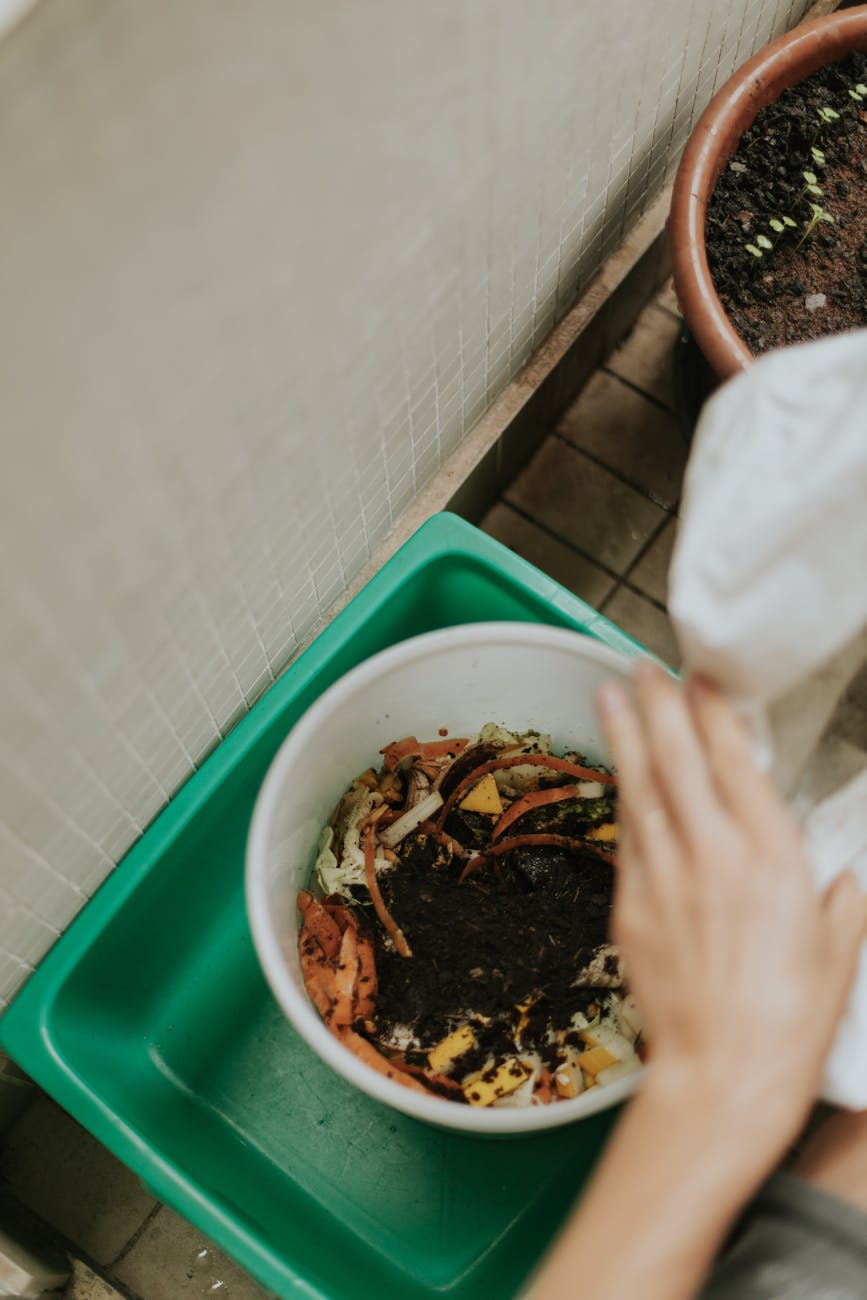
Composting Secrets for Small Balconies: Wormeries & Bokashi
The desire to cultivate food, even in a densely packed city environment, is powerful. For those of us managing small balconies, the dream often collides with the reality of limited square footage. Yet, that dream doesn’t have to remain a pipe dream when it comes to feeding your plants. The solution lies not in acres of land, but in mastering resourceful methods for small balcony composting. We are talking about transforming kitchen waste into nutrient-dense soil right outside our door. This process is entirely achievable, requiring creativity and a good understanding of decomposition science.
Why Traditional Composting Fails on the Balcony
Many people assume that composting requires a large yard or a sprawling garden bed. That assumption simply doesn’t hold true for urban dwellers. The primary limitations are space, odor control, and managing pests in close proximity to living spaces. Standard, open-pile composting methods often generate unwelcome smells and attract unwanted attention when confined to a balcony setting. Therefore, we need systems that operate efficiently within strict spatial constraints.
The goal shifts from large-scale decomposition to contained, managed biological processing. We must focus on minimizing volume while maximizing the rate at which organic matter breaks down. This requires selecting methods specifically engineered for small-scale environments. Think about the materials available: vertical space, container limits, and the need for discreet operations.
The Space Challenge: Rethinking Volume
Balcony containers are inherently limited. A single bin cannot accommodate a traditional compost pile. This forces us into compact, contained systems where the composting process happens in a highly controlled, often closed loop. Open piles simply do not work here. They invite pests and generate humidity issues that can be problematic against apartment walls or railings.
This spatial constraint pushes us toward vermicomposting or fermentation techniques. These methods manage the waste indoors or within specific, contained containers, turning a potential nuisance into a valuable resource. The key is understanding the ratio of material to container size. A small wormery or a Bokashi bin offers a perfect compromise between efficiency and footprint.
Wormeries: The Magic of Vermicomposting on a Balcony
Vermicomposting, the practice of using worms to break down organic matter, proves to be an exceptionally effective technique for small balcony composting. Earthworms thrive in moist, dark environments, and they accelerate the breakdown process significantly. They consume kitchen scraps—fruit peels, coffee grounds, veggie trimmings—and excrete nutrient-rich castings.
Setting Up a Successful Wormery
Establishing a wormery on a balcony requires careful planning. Temperature regulation is paramount. Worms are sensitive to extreme heat or cold; maintaining a stable, moderate temperature ensures their health and optimal feeding rate. Avoid direct, intense midday sun exposure on the bedding itself.
The container choice matters immensely. You need a system that allows for easy access and good drainage. Repurposed plastic storage bins, deep wooden crates, or specialized worm farm kits are excellent starting points. The structure must allow for good airflow while preventing excessive moisture buildup. A slight elevation can also aid in managing drainage, which is critical when dealing with moist organic waste.
Managing the Worm Environment
The substrate, or bedding, forms the foundation of the composting mechanism. It should be rich and fluffy, providing ample space for the worms to burrow and thrive. Avoid adding materials that break down too quickly or are overly acidic. A good mix often involves shredded cardboard, coir (coconut fiber), and aged compost as a base.
Feeding schedule is straightforward but requires observation. Introduce food scraps slowly, allowing the worms time to process them before introducing large quantities. Overfeeding leads to anaerobic conditions and foul odors. Observe the castings; they should be dark, crumbly, and earthy smelling. This visual feedback tells you if the system is functioning correctly. If you notice a shift in behavior or odor, it signals an imbalance that needs immediate correction, perhaps by adjusting moisture levels or reducing food input temporarily.
Bokashi: Fermentation for Odorless Waste Management
When space is extremely limited, or when dealing with specific types of kitchen waste that are difficult to process in a wormery—like meat or dairy (which worms generally avoid)—Bokashi composting emerges as an ingenious alternative for small balcony composting. Bokashi is not traditional composting; it is an anaerobic fermentation process.
Understanding the Bokashi Process
Bokashi involves inoculating food scraps with a specific microbial bran, typically containing effective microorganisms (EM). This process pickles the food waste, effectively neutralizing pathogens and preventing the odor associated with raw scraps. The fermented material is then buried or stored until it has fully decomposed into a rich soil amendment.
The key difference here is that Bokashi pre-treats the waste. It converts the putrefying matter into a stable, manageable, acidic ferment. This fermentation step eliminates the immediate smell issue, making it far more suitable for balcony living where odor management is critical. You are not composting in the traditional sense; you are fermenting it into a ready-to-use amendment.
Integrating Bokashi with Balcony Gardening
Once your kitchen scraps are fully fermented in the Bokashi bin, the material must be buried in a suitable medium—garden soil or a generous layer of compost—before introduction to plants. The fermentation process creates an excellent pre-compost that inoculates the final growing medium with beneficial microorganisms. This method handles higher moisture content and lessens the immediate mess associated with direct composting.
Consider how this fits into your vertical space. If you are utilizing hanging planters or wall pockets for herbs, the small volume of Bokashi material can be mixed directly into those containers to enrich the soil immediately. For growing larger plants that benefit from deeper root systems, integrating this fermented matter into larger pots enhances overall soil health significantly.
Maximizing Vertical Space with Composting Principles
Balconies naturally encourage vertical thinking. When space is scarce, every square inch must be utilized efficiently. The principles learned in small balcony composting translate directly into optimizing your growing arrangements. We move beyond simply storing compost; we integrate the process into a living system.
Linking Compost to Vertical Systems
When you are growing vertically—using trellises or wall pockets for climbing plants, perhaps focusing on things like Vertical Gardening Flowers: Creative Trellising or Flower Wall Ideas—the nutrient supply becomes even more critical. Plants in these systems demand consistent, high-quality feeding because they utilize the resources so efficiently. The castings from a wormery or the rich compost derived from Bokashi become the perfect, slow-release fertilizer for these demanding setups.
The continuous cycle of waste input and soil output creates a closed loop. You feed the worms or the Bokashi bin with balcony scraps; you harvest the resulting nutrient gold; you return that gold to your pots. This self-sufficiency reduces reliance on external, store-bought fertilizers and fosters a deeper appreciation for the gardening process itself.
Water Management Synergy
Composting systems, particularly wormeries, thrive in consistent moisture. Understanding this relationship is vital when managing water in small containers. If your system gets too wet, aeration suffers. If your plants get too dry, nutrient uptake slows down. This synergy reminds us why techniques like DIY Self-Watering Systems for Tiny Urban Containers are so valuable; they manage the environmental variables—moisture and air—that allow the composting process to succeed while simultaneously ensuring optimal plant health.
The managed decomposition produces a soil that holds water better than standard potting mix. This inherent quality enhances the success of any growing strategy, whether you are focusing on leafy greens or flowering vines.
Final Thoughts on Urban Resourcefulness
Mastering small balcony composting is less about achieving perfect, industrial-scale results and more about establishing an intelligent, contained ecosystem. Wormeries provide a living, tangible demonstration of decomposition, while Bokashi offers a powerful means to manage kitchen waste discreetly. Both methods prove that urban gardening does not require large tracts of land; it requires smart material management and an understanding of biological cycles. Start small, observe closely, and watch your balcony transform into a productive, thriving micro-farm.
Tags: balcony gardening, wormery, bokashi, urban composting, small space gardening, vermicomposting, organic waste
Featured Image by Letícia Alvares on Pexels.