
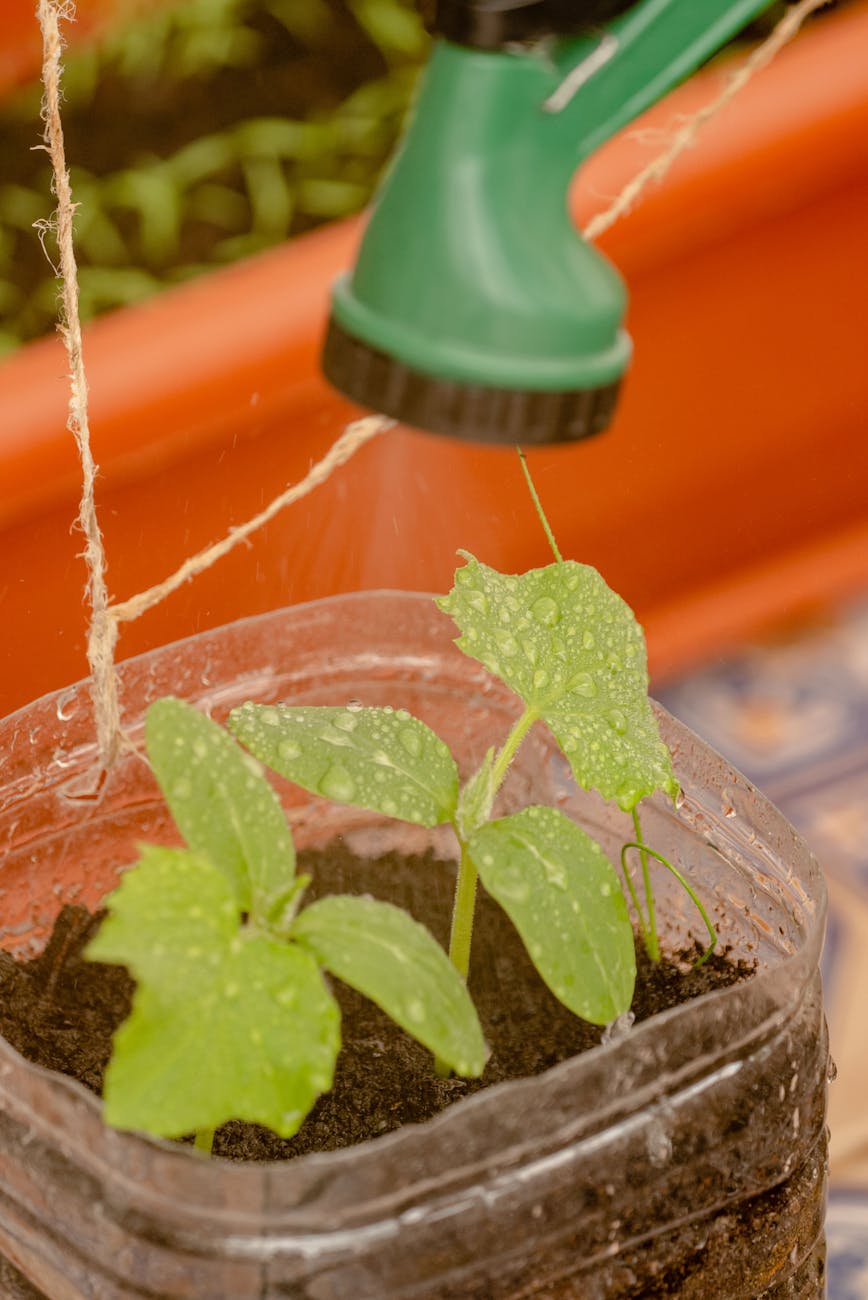
Automating Hydration for Container Crops
When managing small urban gardens, the primary bottleneck often shifts from soil quality to consistent water delivery. Traditional top-watering methods introduce significant inefficiency; water rapidly evaporates or drains away before the roots can fully absorb it, leading to inconsistent growth patterns and increased maintenance load. We observe that this inconsistency directly impacts yield potential in confined container settings. Building a functional self-watering container garden system addresses this by creating a controlled, reservoir-based hydration cycle.
The Physics of Substrate Moisture Management
The core mechanism behind effective self-watering lies in managing the soil-to-air interface and ensuring continuous, localized moisture supply. A simple passive wicking system relies on capillary action; water is drawn from a saturated reservoir into the surrounding growing medium through porous materials. We must engineer this process to function optimally within container constraints.
Consider the principles of evapotranspiration. Plants transpire water vapor, and this process accelerates significantly in hot, exposed urban environments. If the substrate dries out too quickly, root stress initiates, leading to reduced nutrient uptake and potential fungal issues. A self-watering setup mitigates this risk by maintaining a consistent moisture level within the growing zone, independent of immediate external conditions. The system essentially creates a microclimate where water loss is minimized, and replenishment occurs only when the soil matrix signals a deficit.
Designing Effective Self-Watering Architectures
We can implement several designs depending on the container size and desired automation level. The goal is to balance material cost against hydrological efficiency.
Submersible Reservoir Systems
These systems involve placing a water reservoir beneath the growing medium, connected via a wicking channel or porous barrier. The system relies on gravity feeding and capillary action pulling water up into the root zone as needed. This method is excellent for deep containers where the substrate itself needs consistent saturation. The efficiency here depends heavily on the wick material and the porosity of the container walls. We must ensure the connection point between the reservoir and the soil remains saturated throughout the watering cycle, preventing stagnation or mold development at the interface.
Wicking and Reservoir Overlays
Another practical approach involves creating a layered system where a water-retaining base layer sits beneath the primary growing medium, with an overlying reservoir feeding it. This technique manages moisture retention within the container walls themselves. The material chosen for this barrier must possess adequate hydrophilicity without becoming overly saturated to the point of structural failure or anaerobic conditions developing at the base. This approach provides superior control over water volume compared to simple surface watering.
Material Selection and Budget Optimization
Developing a budget-friendly self-watering container garden requires careful material selection. We are aiming for solutions that leverage readily available, inexpensive components while maintaining hydrological integrity. Plastic containers, commonly used for urban gardening, must be assessed for their ability to manage water retention without leaching harmful chemicals into the substrate.
For constructing reservoirs, food-grade plastic containers or repurposed durable containers work well. The critical component is creating a reliable conduit between the source and the soil. Simple materials like felt, coarse fabric, or specialized wicking mats function as excellent capillary bridges. We observe that thicker, more fibrous materials offer higher surface area contact, which enhances the rate of water transfer. When sourcing these components, we look for materials with high porosity to maximize capillary flow rates.
Integrating Systems into Vertical Urban Spaces
Urban gardening often demands maximizing space, pushing cultivation onto vertical surfaces. When integrating self-watering principles into vertical systems, the concept shifts from container management to systemic plumbing across multiple tiers. For instance, in setups utilizing pallet railing solutions for vertical gardening, ensuring each tier receives adequate and consistent moisture becomes paramount.
Vertical gardening maximizes surface area exposure, which increases evaporative demand significantly. Therefore, the efficiency of the self-watering mechanism must be robust enough to handle these heightened demands across the entire vertical plane. Systems designed for vertical growth necessitate interconnected reservoirs or highly efficient drip/wicking channels that distribute water evenly across all plants simultaneously, avoiding localized overwatering on any single tier. This addresses the complexity inherent in maximizing yield on small balconies and walls.
Analyzing Water Conservation Outcomes
The practical implication of implementing these systems is a measurable reduction in water consumption. By eliminating inefficient surface watering, we directly reduce evaporative losses associated with open-top containers. Our analysis suggests that closed-loop, wicking systems can achieve water usage efficiencies significantly higher than traditional methods, potentially reducing consumption by 30 to 50 percent depending on the climate and container type. This operational shift moves gardening from a reactive chore to a predictable, automated process.
The investment in an initial setup is rapidly offset by long-term savings in water use and reduced labor for daily monitoring. A well-designed self-watering container garden functions as a passive hydrologic regulator, demanding less intervention while providing superior plant health. The ability to automate hydration allows urban gardeners to focus energy on cultivation rather than constant environmental management. This analytical approach transforms the hobby into an efficient, sustainable micro-farming practice right outside the door.
Tags: urban gardening, self-watering, DIY gardening, container gardening, budget gardening, small space gardening, watering systems
Featured Image by Atlantic Ambience on Pexels.