
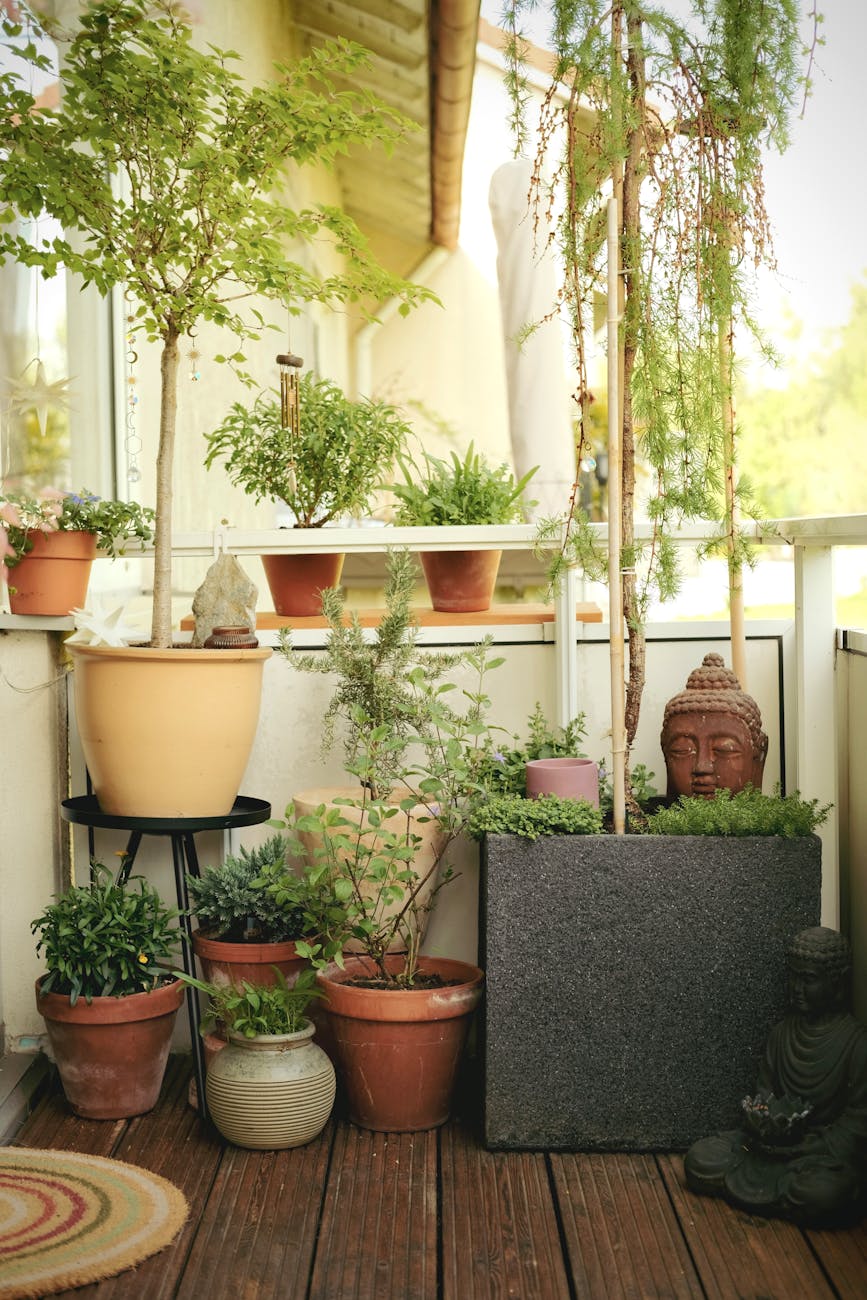
Mastering the Mechanics of Container Selection for Urban Cultivation
When confining cultivation to limited urban footprints, the choice of physical vessel becomes a critical engineering decision. We are not simply selecting a pot; we are designing a system where root health, water retention, and structural integrity dictate yield potential. Understanding the mechanics behind container selection is the first step toward successful small-space gardening.
Evaluating Material Properties for Root Health
The material a container is constructed from directly influences the soil-to-root interaction, which governs nutrient uptake efficiency. Terracotta, for instance, possesses high porosity, allowing for excellent gaseous exchange and rapid moisture evaporation. This can be advantageous in very hot climates, but we observe that it necessitates more frequent watering because its porous nature accelerates water loss. Conversely, plastic containers offer superior water retention capacity, which is beneficial during dry spells, yet they present a different thermal dynamic near the root zone.
Wood-fiber or untreated lumber alternatives provide a more buffered environment for roots, allowing for slower, steadier hydration rates. These materials permit microbial activity within the substrate, fostering a living soil ecosystem from the outset. When assessing options for your container selection urban gardening, you must weigh these material properties against your specific microclimate and plant requirements.
Assessing Drainage and Aeration Requirements
The fundamental mechanism of root respiration depends entirely on the balance between moisture availability and oxygen saturation within the root ball. Poor drainage leads to anaerobic conditions, where pathogenic fungi proliferate, suffocating the roots and inhibiting nutrient translocation from the substrate into the plant tissues. We need substrates that facilitate continuous, albeit controlled, water movement.
A critical failure point in many small-space setups is inadequate drainage. Containers must feature sufficient perforations or weep holes to prevent standing water, which creates an environment ripe for root rot. When moving toward larger projects, such as building raised beds, the engineering focus shifts entirely to creating a robust, self-regulating hydrological system.
Sizing Containers to Match Plant Metabolism
The volume of soil dictates the depth of the root system that can develop before encountering physical constraints. Small plants require minimal substrate depth; their root architecture is naturally shallow and fibrous. Conversely, larger, deeper-rooted specimens demand significantly greater volumetric capacity to establish adequate biomass. Misalignment here results in stunted growth or compromised overall plant vitality because the roots cannot explore the necessary volume for optimal nutrient and water absorption.
We often see novice gardeners select containers based on aesthetic preference rather than botanical necessity. A shallow container forces a compact root system, which limits the plant’s ability to support heavy fruiting or dense foliage development over time. Consider the mature size of your desired plant; scale the container volume accordingly, allowing ample space for future expansion and growth without immediate repotting stress.
Exploring Vertical Strategies for Space Maximization
When horizontal space is severely constrained, the optimization strategy shifts vertically. Utilizing vertical planes allows us to multiply growing surface area without encroaching on horizontal ground space. This approach fundamentally alters how we manage resource allocation in dense urban settings.
Pallet systems and tiered shelving units become effective scaffolding mechanisms. These structures allow plants to utilize air circulation patterns that might otherwise be stagnant in a densely packed arrangement. We observe that vertical gardening enhances light exposure for plants placed higher up, mitigating shading issues common beneath taller neighboring structures. This strategy is particularly potent when pairing it with specific plant choices; for instance, selecting trailing varieties can maximize the use of vertical space while still providing necessary surface area for root establishment. For those focused on attracting beneficial insects, exploring options like balcony arrangements supports strategies outlined in guides concerning Balcony Bloom Secrets: Fragrant Flowers for Pollinators.
Substrate Composition: The Foundation of Nutrient Delivery
The growing medium itself is not inert filler; it functions as the primary interface for nutrient exchange and water regulation. A standard garden soil mix, when used in confined containers, often compacts too densely, impeding necessary gas exchange. We must engineer a substrate that balances water capacity with aeration potential.
Incorporating amendments like coarse organic matter—such as perlite, coarse sand, or aged compost—into the base mixture increases the overall porosity of the medium significantly. This increased pore space creates pathways for oxygen diffusion to the roots and facilitates rapid drainage. When you are focusing on nutrient delivery in a small system, you are essentially engineering a slow-release mechanism. For instance, using organic matter alongside beneficial microbial inputs allows the soil matrix itself to manage nutrient cycling more effectively than relying solely on external fertilization applications. If you are interested in closing the loop by processing household waste, exploring methods like DIY Bokashi for Apartments: Turn Scraps into Potent Soil shows how organic matter can be transformed into a rich medium.
Water Management in Container Systems
Watering containers demands a precise understanding of evaporative loss versus plant transpiration rates. Containers exposed to direct sun and wind exhibit significantly higher rates of water loss than those shaded by surrounding structures or positioned in sheltered areas. This differential evaporation rate means that watering schedules must become site-specific, not arbitrary.
The mechanism dictates that the soil moisture tension determines when the system requires replenishment. Allowing the top layer of soil to dry out slightly between waterings encourages deeper root exploration and stronger water uptake. Monitor soil moisture levels using simple probes to establish a feedback loop for your irrigation strategy. Ignoring this process leads to cycles of overwatering, which suffocates roots, and underwatering, which stresses plant tissues.
Synthesis: Aligning Container Choice with Urban Reality
Selecting the right container is an exercise in systems thinking. It involves integrating physical constraints, hydrological demands, material science, and biological needs into a single design decision. We observe that successful small-urban gardening hinges on recognizing these interconnected variables rather than treating them in isolation. The initial choice of container sets the parameters for every subsequent management task—from watering frequency to substrate amendment to vertical expansion plans. Understanding how materials interact with water and roots provides the framework necessary to move beyond simple planting toward true horticultural engineering within limited urban spaces.
Tags: urban gardening, container selection, small space gardening, container gardening, raised beds, vertical gardening, beginner gardening
Featured Image by Laura Cleffmann on Pexels.