
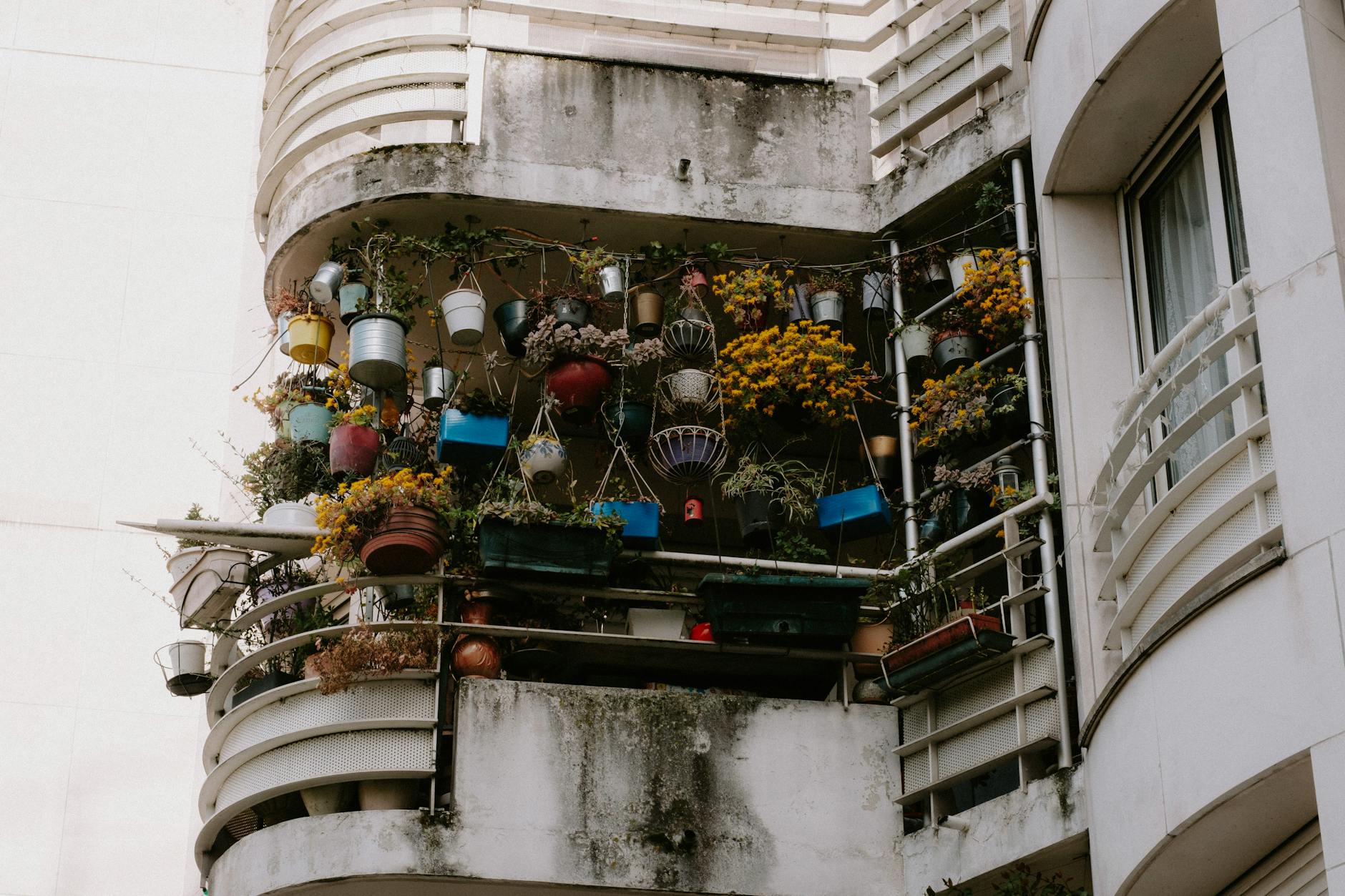
Engineering Density: How Vertical Gardening Reconfigures Urban Cultivation
We observe a fundamental constraint in dense urban environments: horizontal space is severely limited. This physical reality forces us to shift our approach to cultivation, demanding a vertical strategy. Vertical gardening containers are not merely aesthetic additions; they represent an engineering solution to spatial scarcity, maximizing photosynthetic surface area within constrained footprints. We are essentially manipulating the three-dimensional plane to exploit unused vertical real estate, transforming neglected wall space or balcony railings into active growing zones.
The mechanism at play here involves optimizing density. By stacking plants vertically instead of spreading them horizontally across a flat surface, we increase the total biomass yield per square meter of floor space dramatically. This strategy directly addresses the inefficiency inherent in traditional gardening methods when dealing with small urban plots. Consider the implications for balcony setups; where a standard planter might only occupy a defined horizontal footprint, a vertical system utilizes the cubic volume available, allowing for multiple independent growing systems in a single, small area.
Optimizing Surface Area Utilization
The primary advantage of employing vertical structures lies in the expansion of accessible growing surfaces. When we utilize walls or railings, we bypass the limitations imposed by ground-level plots. This is particularly crucial in environments where soil depth is shallow or access to traditional soil amendments proves difficult. We are creating an artificial, multi-tiered ecosystem.
We can stack lightweight containers, utilizing modular designs that interlock or hang securely, ensuring structural integrity while maximizing plant exposure to incident sunlight. The physical relationship between the stacked layers dictates water and nutrient flow; understanding this hydrostatic principle is key to successful implementation. A well-designed vertical system allows for independent drainage pathways, preventing root asphyxiation in the lower tiers.
This spatial rearrangement directly impacts the photosynthetic efficiency of the plants themselves. Plants receive direct, unobstructed light exposure across multiple planes, reducing self-shading effects that commonly occur when plants are densely packed on a single horizontal plane. Our analysis suggests that this increased light exposure correlates with higher rates of chlorophyll production and consequently, greater biomass accumulation.
System Selection: Containers for Verticality
Selecting the appropriate types of vertical gardening containers requires an assessment of both load-bearing capacity and water retention capabilities. Not all materials or designs perform equally well when subjected to the dynamic forces of living plants and environmental exposure.
We encounter systems that rely on hanging mechanisms, often utilizing sturdy hooks or tension systems attached to railings. These are ideal for maximizing space on narrow balconies where floor space is entirely unavailable. Conversely, stackable systems leverage gravity and interlocking geometries. These require careful consideration of material density; lightweight plastics or treated wood composites perform well, provided they resist warping from temperature fluctuations.
The choice of container dictates the operational parameters. If you aim to grow larger, deeper-rooted crops, the containers must possess sufficient volume and robust drainage holes. For smaller herbs or shallow-rooted greens, shallower, wider containers might suffice when stacked in a tiered fashion. We must engineer the system to match the botanical requirements of the specific cultivation goals we have established for that vertical space.
Integrating Water and Nutrient Delivery
Managing irrigation within a multi-tiered structure presents an interesting logistical challenge. Gravity assists the flow, but ensuring equitable distribution across all levels requires thoughtful plumbing design. Water tends to pool in the upper containers unless the system is engineered with controlled overflow or integrated reservoir systems. We observe that passive drainage can lead to uneven watering, stressing plants at different elevations.
We must establish a reliable method for nutrient delivery that accounts for the vertical arrangement. A common practice involves creating a central drip feed or utilizing a recirculating system where water flows from a primary reservoir down through the stack. This ensures that all growing media receive adequate hydration without requiring constant manual intervention for every single tier. For those exploring soil-less systems, understanding how to manage nutrient uptake efficiently becomes even more critical. Exploring methods like using DIY Vermicompost Tea provides an excellent route toward creating bespoke, nutrient-rich water solutions tailored exactly to what the plants at each level require.
Yield Implications and Practical Application
The ultimate metric for a successful vertical gardening deployment is the achieved yield. By optimizing light exposure, maximizing root access to aerated media, and ensuring consistent hydration, we see measurable increases in productivity compared to traditional container methods on equivalent floor space. We are effectively increasing the growing potential of a limited urban footprint by several orders of magnitude.
Consider how this methodology intersects with narrow balcony gardening strategies. When space is severely constrained horizontally, maximizing vertical growth becomes the only viable path for substantial harvests. This approach allows growers to maximize the density of high-value produce where conventional gardening seems impossible. For instance, stacking culinary herbs on a railing can yield an abundance that far surpasses what could be achieved in a single, shallow planter box.
We see strong correlations between efficient vertical utilization and enhanced plant vigor. Plants exposed to optimized light profiles grow more robustly; their root systems develop deeper and explore the substrate more effectively. This environmental manipulation directly translates into higher marketable yields from the constrained space.
Overcoming Environmental Variables
Urban environments introduce unique variables: intense localized sun exposure, fluctuating air currents, and thermal retention patterns on exterior surfaces. These factors necessitate a resilient design for our vertical setups. The materials chosen must tolerate these stresses without degrading rapidly.
We must account for wind resistance when selecting hanging systems; failure in structural attachment is not an option when dealing with elevated structures. Furthermore, the material choice impacts thermal mass; some materials retain heat differently than others, affecting root temperatures during cooler periods. Our experience demonstrates that robust engineering—selecting appropriate, weather-resistant containers and secure mounting hardware—is as crucial as the planting strategy itself.
The integration of soil health is another critical layer. Since vertical systems often rely on less soil volume per plant, the quality of the growing medium becomes paramount. Using high-quality potting mixes ensures that the roots receive the necessary mineral availability, preventing nutrient deficiencies that would otherwise stunt growth regardless of light exposure.
The Next Evolution: Closed-Loop Systems
As we push the boundaries of small-space cultivation, the next logical step involves integrating closed-loop systems into our vertical designs. This moves beyond simple container stacking toward a fully integrated micro-ecosystem where waste streams are recycled internally. Implementing methods like utilizing DIY Vermicompost Tea for nutrient cycling within these vertical arrangements demonstrates how circular resource management can thrive even in highly constrained urban settings. We transition from merely growing plants to managing a self-sustaining, productive system. This level of integration represents the pinnacle of optimizing yields within tiny urban spaces.
Tags: vertical gardening, urban gardening, small space gardening, stackable planters, hanging gardens, container gardening, balcony gardening
Featured Image by Mathias Reding on Pexels.