
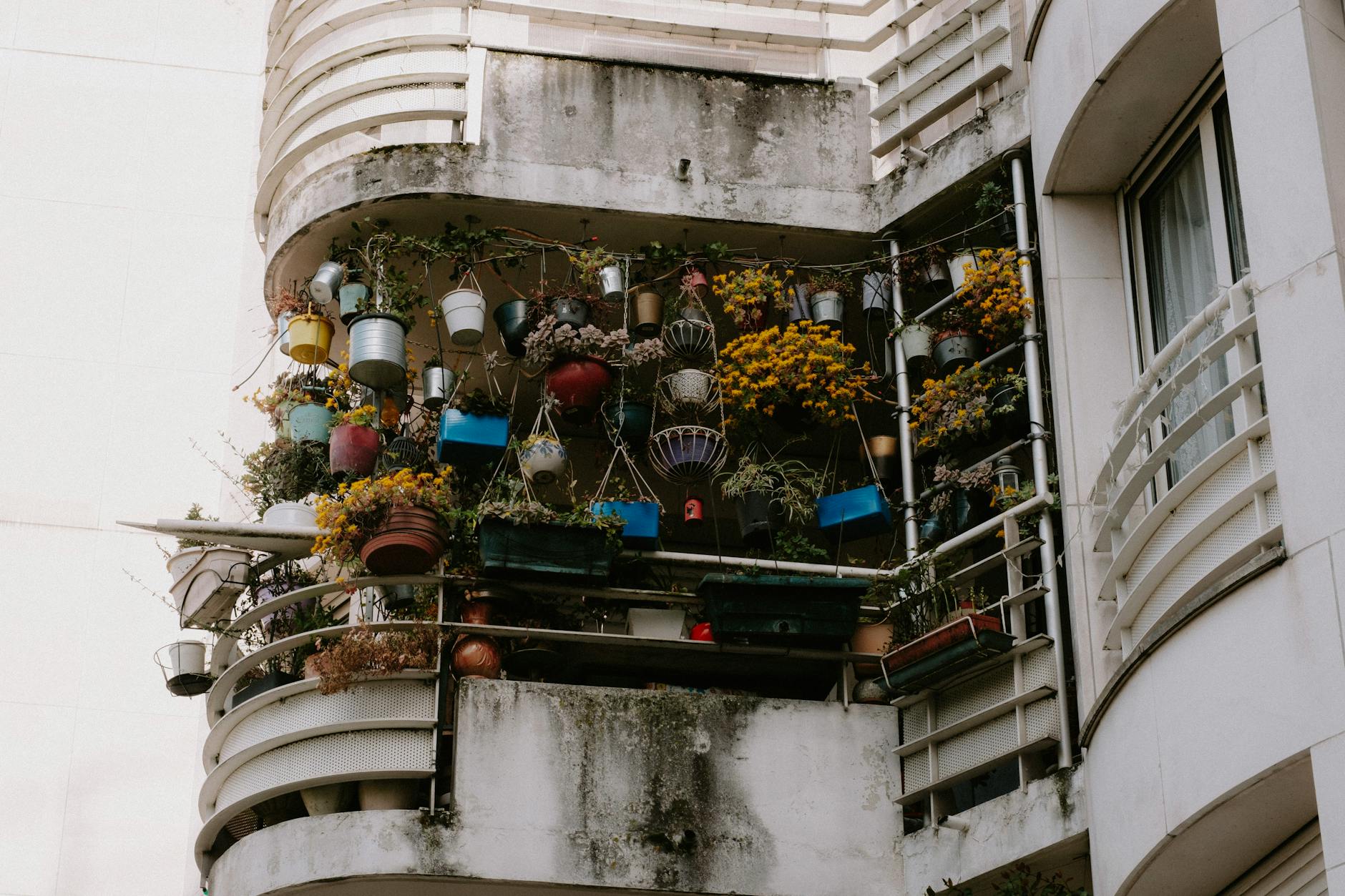
Mapping Your Urban Microclimate for Optimal Plant Selection
When attempting to cultivate anything successfully on a balcony, the environment you are working with is not standardized; it is a specific, localized ecosystem shaped by external physical forces. Understanding this reality is the fundamental first step toward successful gardening. We must move beyond simply choosing pretty flowers and instead analyze the tangible environmental inputs that dictate plant survival rates in confined urban settings. This involves quantifying light exposure, wind shear, temperature fluctuation, and water retention capacity within your specific balcony footprint.
The success of any planting scheme hinges on accurately modeling these variables. Plants require specific energy budgets to perform photosynthesis and regulate transpiration; when those budgets are mismatched with the actual conditions, growth stalls or plant tissues suffer stress. We observe that simply placing a sun-loving plant in a shaded nook guarantees suboptimal results. Therefore, establishing a baseline understanding of your microclimate allows us to engineer the ideal planting arrangement rather than guessing.
Analyzing Light Intensity and Duration
Light is the primary energy source driving botanical development. In an urban environment, the relationship between direct sunlight and indirect shade changes dramatically based on adjacent buildings, window orientation, and surrounding foliage density. We need to measure not just how many hours of light a spot receives, but the quality—the spectral composition and intensity of the photons hitting the soil.
Direct, unfiltered midday sun can induce rapid desiccation in shallow containers, causing root burn before the plant has time to establish robust systems for water uptake. Conversely, areas receiving consistent, bright indirect light often favor shade-tolerant species. We find that plants adapted to lower light levels operate with reduced metabolic rates, which is advantageous when space or light availability is restricted. Mapping these zones requires consistent, albeit simple, observation over a full diurnal cycle.
Assessing Temperature Extremes and Airflow Dynamics
Balconies act as thermal sinks, absorbing and radiating heat differently than the surrounding urban fabric, creating pockets of elevated or diminished temperatures. These thermal variations impact evapotranspiration rates, which directly controls water loss from the potting medium. High wind shear, common on exposed balconies, increases the rate of transpiration significantly, meaning plants in these zones will require more frequent hydration cycles.
We analyze how air movement dictates plant health. Stagnant air pockets can lead to fungal proliferation on leaves and stems because humidity levels remain high near the surface for extended periods. Conversely, areas with consistent airflow promote faster moisture evaporation from the soil surface, reducing the risk of root rot. Understanding this dynamic allows us to position plants strategically; placing moisture-sensitive varieties in areas with better ventilation mitigates stress caused by excessive dampness.
Quantifying Water Availability and Drainage Mechanisms
The substrate material itself plays a critical role in managing the water balance for your balcony flowers. Standard potting mixes possess varying capacities to hold and release moisture, which affects root aeration profoundly. Dense, organic-rich mixes can become waterlogged quickly, creating anaerobic conditions detrimental to root respiration. Our analysis suggests that container gardening necessitates an intentional focus on substrate engineering.
We see a strong correlation between drainage rate and root health. Poor drainage forces roots into hypoxic conditions, slowing nutrient uptake irrespective of how much water is present in the pot. To counteract this mechanical limitation, incorporating amendments like coarse perlite or horticultural sand increases the pore space, enhancing the medium’s capacity to facilitate rapid water percolation away from the root ball. For those seeking advanced hydration strategies, exploring methods like creating DIY Vermicompost Tea: Liquid Fertilizer for Container Gardens (https://twigharbor.com/diy-vermicompost-tea-container-gardens/) provides a method to deliver necessary soluble nutrients directly into the root zone while managing moisture content effectively.
Selecting Species Based on Environmental Constraints
Once the physical parameters of the space are mapped—light, temperature variance, and drainage potential—the selection process shifts from aesthetic preference to physiological compatibility. The goal is to select species whose inherent water and light demands align precisely with the measured environmental input of the balcony. This strategic pairing prevents the common failure mode where a gardener attempts to force an unsuitable plant into a non-viable microclimate.
The choice must account for the season as well as the location. A plant that thrives in a consistently warm, sun-drenched south-facing balcony will suffer significant photo-oxidative damage if placed in a perpetually shaded, cooler north-facing nook during peak growing months. We must consider the plant’s established light tolerance before considering its bloom potential.
Adapting Plant Profiles to Urban Realities
Many popular ornamental plants exhibit high water demands and strong light requirements; therefore, their success on a balcony depends entirely on mitigating environmental deficits through careful placement and substrate selection. Consider succulents or certain herbs, which possess mechanisms to manage moisture retention efficiently, making them relatively forgiving in variable urban settings. Conversely, tender annuals require more stringent thermal buffering, often necessitating placement closer to heat-retaining surfaces if the microclimate is consistently cool.
We observe that plants with shallow root systems are inherently more susceptible to rapid environmental shifts than deep-rooted perennials. This observation reinforces the need for robust substrate engineering in any container setup intended for balcony flowers. If a plant requires substantial, consistent moisture, ensuring that its pot material has excellent internal drainage is non-negotiable; failure here guarantees eventual decline regardless of external care.
Integrating Vertical Strategies for Space Optimization
When horizontal space becomes severely limited, the spatial equation changes entirely. Utilizing vertical planes allows us to maximize photosynthetic opportunity by stacking plants rather than spreading them across a single surface area. This approach addresses the constraint of limited floor space directly by leveraging the three-dimensional volume available on walls or railings.
Vertical gardening wonders: Maximize Flowers in Small Urban Spaces (https://twigharbor.com/vertical-gardening-flowers-urban-spaces-4/) demonstrate how this principle functions practically. By employing trellises or hanging systems, we manipulate light exposure across different vertical strata. Plants positioned higher up receive potentially more consistent direct light, while those situated lower might tolerate slightly reduced intensity. This layering strategy allows us to compensate for localized shading issues inherent in dense cityscapes by creating customized micro-layers of environment for each plant species.
Cultivating Resilience Through Environmental Control
Achieving sustained health in an urban garden is less about perfect placement and more about implementing active control systems that buffer the natural volatility of the exterior environment. This involves managing inputs like water, nutrients, and thermal buffering to ensure the plants’ internal physiological processes remain within optimal parameters.
We are not simply observers; we are active manipulators of this small ecosystem. When conditions fluctuate unexpectedly—a sudden heatwave or an unseasonably cold snap—the resilience built into the plant system determines its outcome. Plants that have been provided with optimized, well-draining substrates and consistent, measured hydration cycles demonstrate superior stress tolerance compared to those managed by reactive watering schedules.
The process requires constant feedback loops between observation and intervention. Monitoring soil moisture levels, checking for signs of fungal development, and adjusting watering frequency based on observed wind patterns are all essential data collection steps. This analytical approach transforms gardening from an intuitive activity into a predictable, manageable science. By understanding the mechanisms governing light, water, and air movement, we gain the authority to engineer thriving spaces where balcony flowers can flourish against the backdrop of the urban environment.
Tags: balcony flowers, urban gardening, microclimate, container gardening, balcony gardening, plant selection, small space gardening
Featured Image by Mathias Reding on Pexels.