
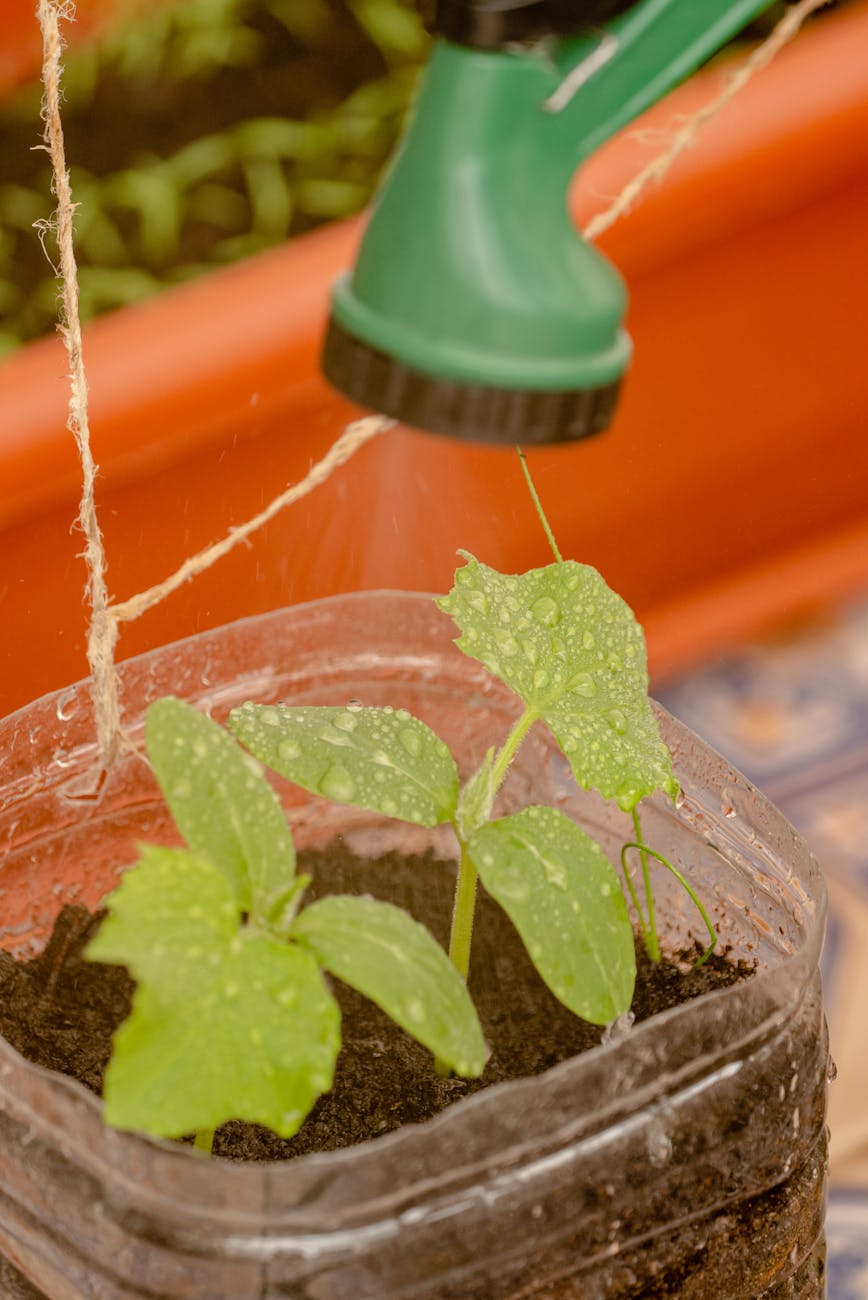
Mastering Water Management for Compact Urban Plots
When transitioning gardening from traditional beds to small, contained urban spaces, water becomes the primary limiting factor. We observe that container gardening introduces unique hydrological challenges; soil dries out rapidly, nutrient leaching accelerates, and inconsistent watering directly dictates plant health. Simply pouring water on the surface offers minimal efficacy. True success in these confined environments depends entirely on establishing a closed-loop, efficient irrigation mechanism tailored to the container’s specific volume and plant needs. We need systems that manage substrate moisture precisely, preventing both overwatering—which promotes root rot—and underwatering—which induces stress and stunted growth.
The goal of any effective self-watering container garden system is to mimic the natural water cycle while automating the delivery of moisture directly to the root zone. This moves beyond simple surface watering into active substrate management. We are constructing a micro-ecosystem where water reservoirs are integrated directly with the growing medium, ensuring consistent moisture availability regardless of external environmental fluctuations.
The Mechanics Behind Substrate Desiccation
Understanding how soil dries out is critical before designing any system. Soil moisture retention is governed by porosity and particle size distribution. Coarse materials, like sandy mixes, exhibit high surface area relative to water volume, leading to rapid evaporative loss when the top layer dries. Clay-heavy soils retain water longer but can suffer from poor aeration if saturated for extended periods. In our small containers, these factors interact intensely with container material—plastic or terracotta—which dictates the rate of heat absorption and subsequent evaporation. If we allow the soil profile to become excessively dry, plant root hairs experience negative turgor pressure, halting nutrient and water uptake processes immediately.
This process demands a solution that maintains an optimal moisture equilibrium within the container walls themselves. A passive system relies on the principles of capillary action and wicking, while an active system utilizes controlled reservoir dynamics. We must design for these physical forces to work in our favor rather than against us.
Evaluating DIY Self-Watering System Architectures
There are several viable methods for constructing a self-watering container garden, each presenting different trade-offs regarding material cost, required maintenance, and water efficiency. Our analysis reveals that the choice often depends on the scale of the project and the available resources for ongoing management.
Substrate Wick Systems: Harnessing Capillary Action
One foundational approach involves utilizing porous materials embedded within the growing medium to regulate moisture distribution. This method capitalizes on capillary action; water is drawn from a reservoir, through the wick, and into the surrounding soil particles as the soil dries out. We can construct these systems using recycled materials or simple fabric tubes. The mechanism relies on maintaining a constant, slight hydrostatic pressure differential between the water source and the substrate.
We observe that success here hinges on material selection. Natural fibers like felt or tightly woven cotton act as excellent wicks because their cellular structure facilitates capillary transport across small gaps. We must ensure the wick material is not directly in contact with excessive heat sources near the container to prevent premature degradation of the absorbent material. This method is highly effective for smaller, shallower containers where the water reservoir can be integrated into the base layer or a dedicated side pocket.
Reservoir and Lid Systems: The Passive Float Method
Another accessible strategy involves creating an elevated water reservoir within the container structure, often utilizing a sealed container placed inside the main planter. Water accumulates in this inner vessel, and the soil below absorbs moisture through osmosis. This configuration requires a seal that prevents evaporation from the water source while allowing sufficient vapor exchange for the plant roots. We must engineer the lid or cover carefully; it cannot be fully impermeable, or trapped humidity will lead to fungal proliferation on the soil surface.
This passive approach offers simplicity in construction. The key variable here is the volume of the reservoir relative to the soil mass and the container’s material porosity. Larger reservoirs buffer against daily fluctuations better, providing a more stable supply for plants experiencing intense diurnal temperature swings common in urban settings.
Wicking and Tube Integration: Optimizing Vertical Space
For maximizing yield in extremely space-constrained environments, integrating vertical gardening techniques with watering systems becomes essential. When utilizing structures like Vertical Veggie Towers, the water delivery must account for gravity’s role. A carefully engineered system can feed water from a top reservoir down through a series of connected wicking tubes or channels distributed across the tiers. This setup addresses the spatial constraint by channeling resources efficiently across multiple plant levels simultaneously.
This integration transforms the problem from managing individual pots to managing an interconnected vertical hydrological network. The efficiency observed in these systems demonstrates how plumbing principles can be applied to horticulture, ensuring that every level receives adequate hydration without requiring constant manual intervention at each tier. We see a marked reduction in wasted water and labor time when this structural approach is employed.
System Implementation: Practical Steps for Urban Growers
Implementing any of these designs requires precise measurement and material preparation. We must move past conceptual design into tangible engineering specifications before assembly commences.
First, calculate the required volume of water capacity based on the container dimensions and the estimated evapotranspiration rate for the specific plants being cultivated. This data informs the necessary size of the internal reservoir or wick system. Second, assess the substrate mixture; using a medium with higher organic content improves water retention capacity overall. Third, select materials that resist the environmental stressors common to urban settings—UV exposure, temperature variation, and potential fungal growth.
When assembling a self-watering container garden, observe how the components interact under simulated stress conditions. We must test the wicking rate; does the material wick water effectively when the substrate is dry? Does the reservoir maintain adequate water levels without overflowing or allowing excessive evaporation? The process becomes iterative, adjusting materials until the observed hydrological flow meets the biological requirements of the plants.
Long-Term Maintenance and Monitoring Protocols
A system is only as effective as its long-term operational protocol. While the initial construction provides automation, ongoing monitoring remains essential for pinpointing systemic failures. We must establish a routine where visual inspection supplements physical measurement. Checking the soil surface daily reveals immediate signs of distress—excessive crusting signals potential mineral buildup or insufficient moisture uptake from the reservoir.
We see that neglecting this observation leads to compounding problems. For example, if the water level in a passive system drops below the critical threshold, root zone dehydration occurs rapidly, irrespective of the internal mechanism working correctly. Therefore, establishing simple visual cues for reservoir levels and substrate saturation becomes an indispensable part of the gardener’s routine. This proactive monitoring allows for timely intervention, preventing minor hydrological issues from escalating into catastrophic plant loss.
The transition to a highly managed system demands a shift in perspective: we are no longer just tending plants; we are managing a controlled, miniature ecosystem where water is the central, non-negotiable resource. By employing these thoughtful, engineered solutions, urban gardeners can reliably cultivate thriving vegetation even within the tightest spatial constraints.
Tags: urban gardening, DIY watering, container gardening, self-watering, small space gardening, budget gardening, container garden
Featured Image by Atlantic Ambience on Pexels.