
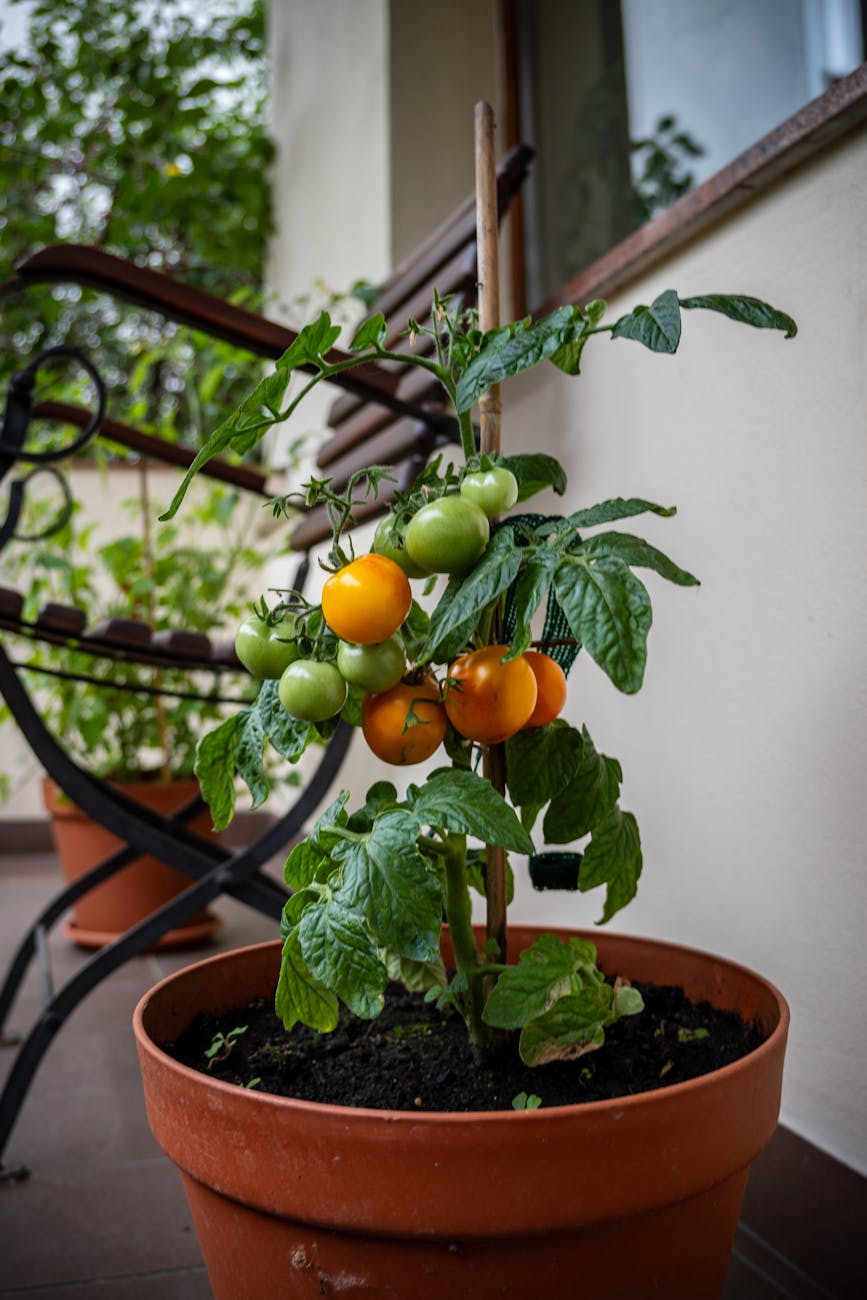
Engineering Space: Maximizing Production Through Vertical Gardening
The constraint of limited horizontal space in dense urban environments necessitates a fundamental shift in cultivation strategy. We observe that traditional row planting is inefficient when real estate is scarce, forcing us to re-evaluate how we interface plants with available vertical surfaces. This realization drives the adoption of vertical gardening urban vegetables systems. These methods do not merely rearrange pots; they fundamentally alter the light exposure, root zone dynamics, and resource management within a confined footprint. We are moving from simple container placement toward integrated, multi-tiered ecological systems.
The Mechanism Behind Vertical Yield Enhancement
The primary benefit derived from vertical structures stems from optimizing photosynthetic surface area relative to the available floor space. By stacking plants vertically, we effectively exploit the three-dimensional volume rather than just the two-dimensional plane. This increases the total biomass potential for a given square footage. Consider the light dynamics; dense vertical growth allows lower-level plants to receive diffused light, while upper-level plants compete efficiently for direct sunlight when positioned correctly against appropriate substrates.
We design these systems not as decorative arrangements but as functional agricultural machines. Trellises and stacked planters create microclimates. The proximity of plants influences transpiration rates and nutrient uptake patterns across the entire system. This localized environmental control allows for hyper-specific cultivation protocols that would be impossible in a standard, flat garden bed. Our analysis suggests that maximizing root exposure to air and substrate interaction through vertical means accelerates nutrient assimilation compared to deep, static containers alone.
Selecting the Optimal Vertical Structure
The choice of structure dictates the efficacy of the entire system. Materials must withstand significant hydrostatic pressure while remaining permeable to root respiration. Wooden stakes, reclaimed pallets, or custom-built metal racks all serve as foundational support, but the specific geometry changes the flow of water and light dramatically. We examine how different configurations affect plant health over a full growing cycle.
For instance, a tightly packed system demands careful consideration of water distribution; any pooling or runoff must be managed immediately to prevent root asphyxiation in lower tiers. Conversely, systems utilizing cascading designs allow for superior drainage management, channeling excess moisture down to reservoirs below. We see that the structural integrity must align with the intended horticultural outcome.
Trellises and Support Systems
Trellising functions as an external scaffolding system, providing necessary physical support for vining crops like beans, peas, and cucumbers. This method manages the sprawling nature of these plants effectively, preventing stem breakage which is a common failure point in container gardening. When implementing this technique, the plant’s growth vector becomes directional, channeling energy toward maximizing vertical reach rather than spreading horizontally across limited space. We must account for the tensile strength of the chosen material versus the weight load imposed by mature vegetation.
Stacking Planters and Modular Systems
Stacking planters move beyond simple single-level containers; they introduce density management. These modular units allow growers to optimize space layer by layer, accommodating different root depths and water retention needs simultaneously. The spacing between tiers is critical; if the gap is too wide, resources become wasted in the interstitial air volume. If the gap is too narrow, competition for nutrients becomes intense, potentially leading to stunted growth or nutrient deficiencies across all levels. We observe that optimized stacking allows for a denser planting density, directly increasing overall yield per square meter of footprint occupied.
Soil Science and Nutrient Delivery in Vertical Systems
The substrate used in vertical gardening must perform under continuous moisture fluctuations and concentrated root activity. Standard potting mixes often fail when subjected to the increased water demands inherent in densely packed vertical systems. We find that the composition of the growing medium directly influences nutrient availability and aeration rates at the root level.
We recommend prioritizing substrates with high porosity to facilitate rapid water exchange, preventing the saturation issues that plague many urban growers. For example, utilizing a tailored mix incorporating coarse materials ensures that oxygen diffusion into the root zone remains adequate, which is essential when roots are densely packed against physical barriers. Referencing resources on the Best Soil Mix for Container Gardening & Urban Vegetables demonstrates that a well-aerated medium is non-negotiable for maximizing the potential of any vertical setup.
Nutrient delivery in these systems requires strategic planning. Since water moves vertically, establishing an efficient drainage and feeding mechanism becomes paramount. Simple watering methods often result in uneven saturation across the stack. This raises the question of how to manage nutrient concentration when different layers receive varying amounts of water. Integrating passive or semi-active irrigation solutions helps maintain consistency across the entire vertical plane. Exploring DIY Self-Watering Systems for Urban Containers reveals how automated systems can ensure that each tier receives its requisite moisture level without excessive manual intervention, thereby stabilizing the environment for optimal growth.
Light Exposure and Plant Selection
Light intensity is a primary limiting factor in urban gardening. Vertical structures offer an opportunity to manipulate light exposure precisely based on plant needs. Plants requiring intense, direct sun should occupy the top tiers, benefiting from unobstructed solar radiation. Shade-tolerant greens or herbs can be situated lower down, benefiting from the diffused light filtering down from the upper layers.
We must account for shading effects; dense foliage blocks light from lower leaves, potentially inhibiting photosynthesis in those specific areas. This necessitates careful plant selection based on their growth habit and light tolerance profiles. Observing the data across various urban microclimates suggests that choosing appropriate cultivars—those with compact or cascading growth patterns—is more successful than attempting to force sun-loving plants into suboptimal shaded zones within a vertical arrangement.
Operationalizing High-Yield Vertical Systems
Implementing these systems requires an iterative approach, treating the garden as a living experiment. Initial setup involves mapping the available light exposure across the structure before introducing any biomass. We monitor growth rates and resource consumption systematically to identify bottlenecks immediately. This analytical process moves beyond simple gardening into applied systems engineering.
The continuous observation allows us to adjust the environmental parameters dynamically. If lower tiers exhibit signs of water stress, we investigate drainage capacity or irrigation frequency for those specific levels. This feedback loop refines the technique, allowing the grower to fine-tune the balance between structural support, soil composition, and water dynamics. Maximizing yields in small urban spaces is achieved not by brute force planting, but by mastering the interaction between physical structure, substrate chemistry, and light physics within a vertical framework.
Tags: vertical gardening, urban gardening, small space gardening, container gardening, apartment gardening, vegetable growing, wall gardens
Featured Image by Michał Robak on Pexels.