
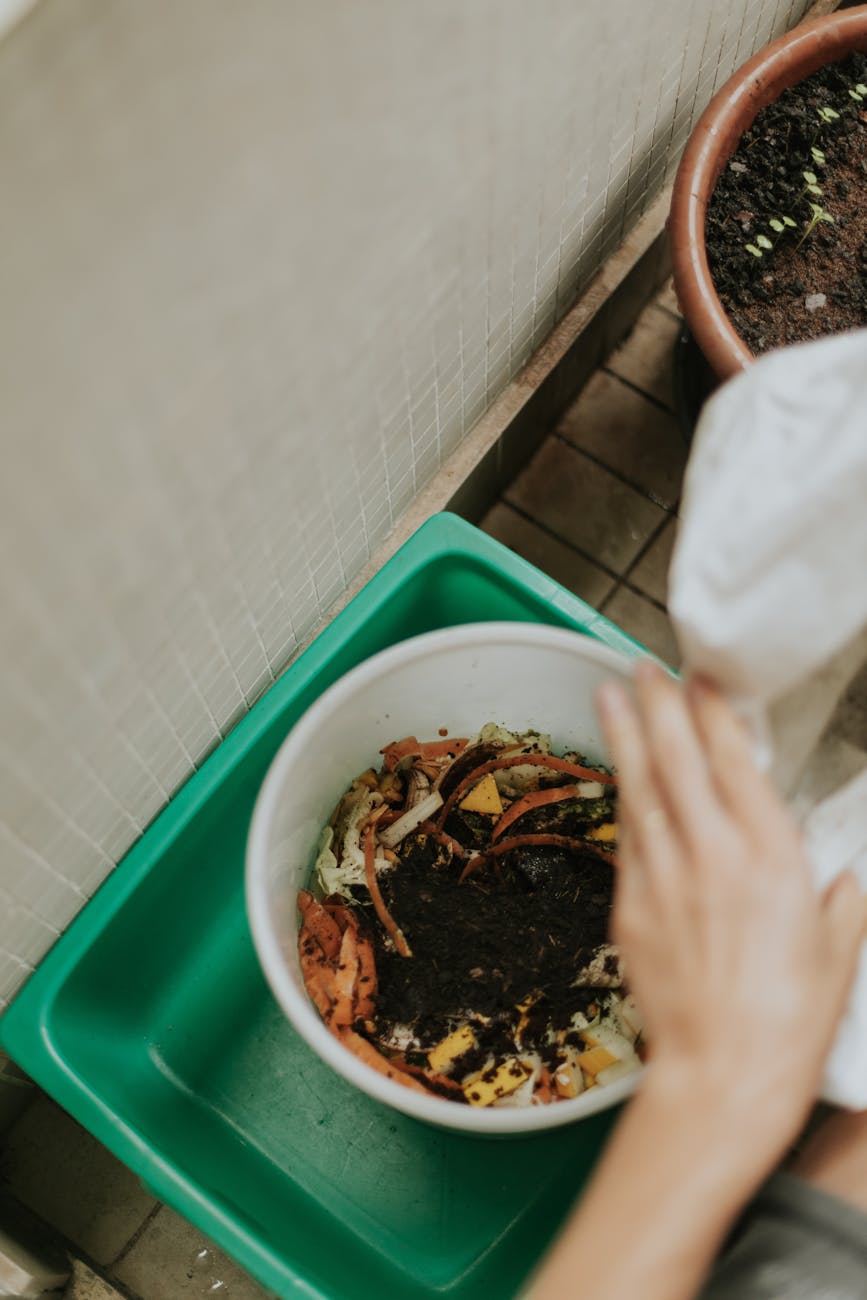
Transforming Kitchen Waste into Potent Urban Garden Amendments
The challenge in small urban gardening is often a scarcity of space, but it is equally defined by an abundance of discarded organic material from our kitchens. We observe that tossing vegetable trimmings or food scraps into the general waste stream represents an inefficient allocation of biological resources. A far superior approach involves capturing this biomass and reprocessing it directly into a valuable resource for our soil systems. This is precisely where Bokashi composting emerges as a highly effective method for small urban gardening environments.
Bokashi is not traditional composting; it functions more as a fermentation process that pre-treats organic matter, making it manageable for dense city living. The mechanism relies on inoculating food scraps with beneficial microorganisms, primarily those capable of breaking down complex carbohydrates into stable organic acids. This anaerobic fermentation occurs in an airtight container, effectively sequestering the waste and preventing the offensive odors typically associated with traditional composting methods when done improperly in close quarters.
Understanding the Bokashi Process Mechanics
To implement this successfully within a small urban setting, one must understand the specific biochemical pathway at play. The process involves layering food scraps—including fruits, vegetables, grains, and coffee grounds—into an airtight bucket, followed by the introduction of Bokashi bran, which is rich in effective microorganisms (EM). These microbes consume the sugars and starches within the waste, initiating a fermentation that alters the composition of the material.
This initial phase results in a pickled, fermented material, not fully decomposed compost yet. The key observation here is that this process significantly reduces the volume of the waste by up to 30 percent, which drastically alleviates storage concerns for apartment dwellers. We are essentially creating an acidic, microbe-rich substrate that requires further processing before it can feed plants directly.
The fermented material must then be buried or allowed to sit for a specific duration—typically two weeks—to allow the microbes to fully break down the organic matter. This fermentation step is critical because it balances the high nitrogen content of food scraps, making the material safer and more conducive for subsequent soil amendment activities.
Integrating Fermented Matter into Urban Soil Systems
The fermented product itself is not ready to be applied directly to delicate garden beds; it requires a secondary decomposition stage. Think of it as an intensive pre-composting step. After fermentation, the material needs aeration and further breakdown to reach a stable humus state that plants can readily absorb.
We observe that applying the raw fermented material immediately risks introducing undesirable compounds if the microbial activity is not fully matured. Therefore, the next logical step involves incorporating this material into a larger composting system or amending potting mixes. This bridges the gap between kitchen waste and usable garden input efficiently.
When integrating this material into containers or raised beds, we are feeding the soil with highly concentrated microbial activity and stabilized organic compounds. This process enhances the soil’s structure, improving water retention and nutrient availability for the plants growing within. Imagine using this fermented byproduct to enrich your balcony container soil; it provides a slow-release source of beneficial microorganisms that actively improve microbial diversity in the root zone.
Troubleshooting Common Urban Gardening Hurdles with Organic Inputs
When managing organic inputs in confined urban spaces, issues related to pest management and nutrient balance often surface quickly. Understanding the input stream helps manage the output health of the garden ecosystem. For instance, ensuring your soil amendments are balanced is paramount when dealing with pests like aphids, which thrive on stressed plant systems. If you notice signs of infestation, checking the underlying soil health provides context for necessary intervention.
The principle applies equally to pest control strategies. A strong, healthy soil biome supports plants naturally resist certain pressures; conversely, nutrient deficiencies or imbalances can create vulnerabilities. When managing pests that target foliage, like aphids, optimizing the plant’s internal defense mechanisms through superior nutrition is a foundational strategy. Research into effective management techniques must always consider the holistic health of the entire growing environment, not just the immediate symptom.
Beyond Composting: Maximizing Resource Cycling
The utility of Bokashi extends beyond simple waste diversion; it fundamentally changes how we view resource cycling in dense environments. We are moving from a linear consumption model—take, make, dispose—to a circular system where kitchen byproducts become inputs for cultivation. This closed-loop approach minimizes external waste streams and maximizes the utility of limited urban space.
The resulting material, once fully composted, acts as an exceptional soil conditioner. It improves the water-holding capacity of sandy urban soils and enhances the cation exchange capacity necessary for nutrient uptake by root systems. This action directly mitigates the stress that often plagues container gardening where nutrient leaching is a constant concern.
We see that incorporating fermented materials fosters a more resilient garden environment. The process itself demands an awareness of biological timelines; the fermentation duration dictates the final quality, requiring patience and careful observation from the gardener. Mastering this cycle transforms what was once an environmental liability into a tangible asset for food production.
Tags: Bokashi, Urban Gardening, Composting, Small Space Gardening, Kitchen Scraps, DIY Composting, Soil Amendment
Featured Image by Letícia Alvares on Pexels.