
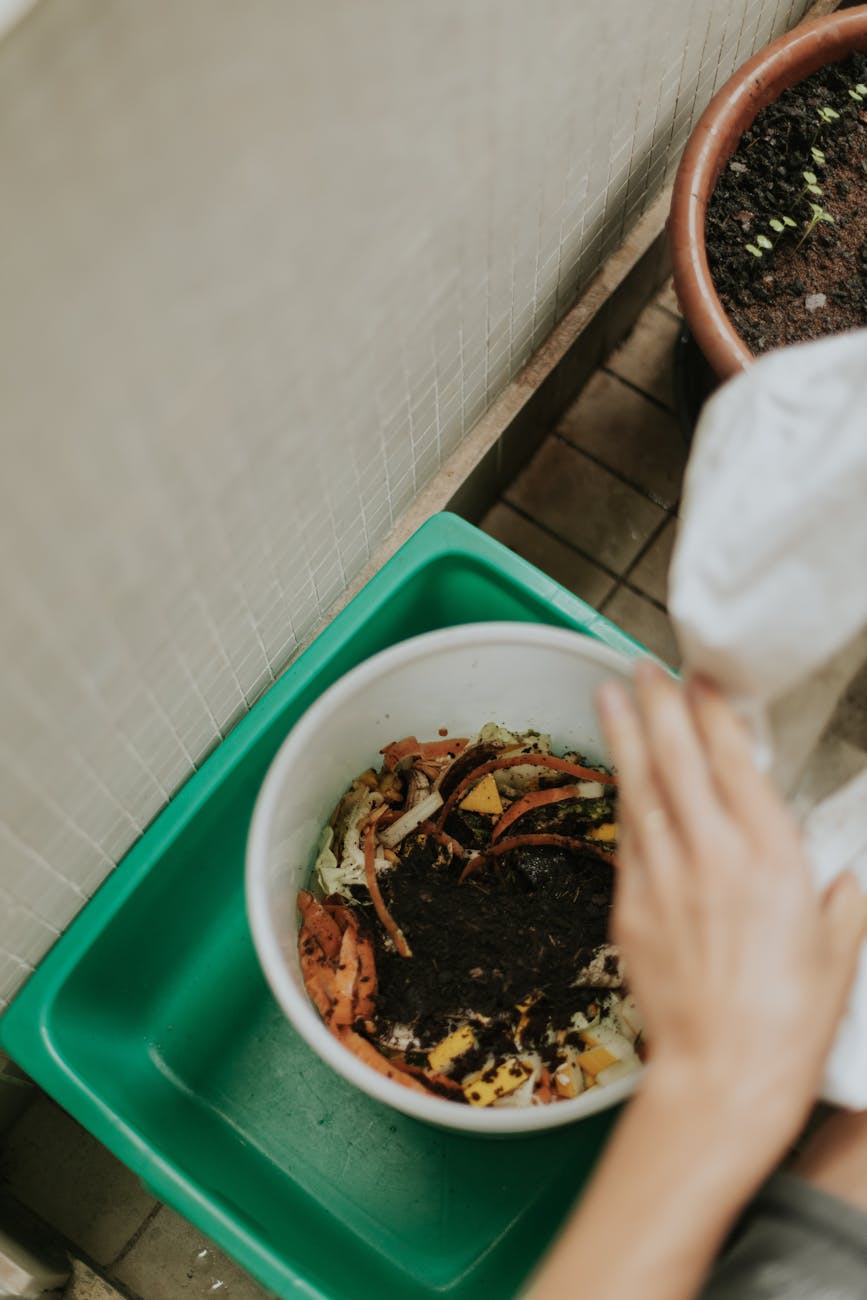
Turning Kitchen Waste into Living Soil: The Science of Bokashi for Urban Dwellers
Many city dwellers grapple with the paradox of wanting to cultivate fresh food while facing spatial constraints. The conventional methods of soil building often demand significant outdoor space and time, presenting a barrier for apartment gardening enthusiasts. This is where processes like Bokashi composting for apartments emerge as a compelling solution. We are not simply throwing scraps into a bin; we are manipulating microbial activity to transform organic waste into a nutrient-dense substrate that can thrive indoors.
The core mechanism of Bokashi relies on fermentation, specifically anaerobic, salt-tolerant bacteria. These microorganisms consume the carbohydrates and proteins in food scraps, which prevents the typical putrefaction associated with traditional composting. Instead of producing foul odors, the process yields a fermented material rich in beneficial microorganisms. This fermented matter is not ready-to-use soil; it functions as a highly concentrated inoculant. We observe that this inoculation provides an excellent starting point for subsequent soil amendments, dramatically accelerating the decomposition process within a small volume.
Understanding the Bokashi Process: A Microbial Perspective
To implement this effectively, one must grasp the biology at play. The system involves layering food scraps into an airtight container and inoculating them with a specific mixture of Bokashi bran or active microbial cultures. This controlled environment sets the stage for beneficial microbial colonization. The process is intentionally anaerobic, meaning oxygen is excluded, forcing the bacteria to work through fermentation pathways.
When you introduce the bran, you are seeding the system with the necessary microorganisms capable of breaking down complex organic polymers into simpler, more plant-available forms. We see a distinct shift in the material over time as the microbial community establishes itself. This controlled fermentation isolates the breakdown process, allowing us to manage the input and output effectively within confined urban spaces.
System Setup: Practical Application in Small Spaces
Setting up a functional Bokashi system for an apartment requires minimal physical space but demands attention to specific environmental controls. A sealed bucket or bin serves as the primary vessel. The key is ensuring airtightness; any ingress of oxygen will divert the process away from beneficial fermentation and toward undesirable mold growth.
The layering technique dictates successful microbial interaction. Food scraps, which are the feedstock, must be broken down into manageable pieces before being added to the container. This mechanical preparation assists the initial microbial access. The bran acts as the catalyst, introducing the necessary bacterial populations that initiate the breakdown sequence. We find that consistency in feeding—adding scraps and bran regularly—is a critical variable determining the speed and quality of the resulting material.
Beyond Fermentation: Incorporating the Pre-Compost into Indoor Gardening
The fermented material itself is not soil. It represents a highly processed organic matter, rich in humic acids and microbial biomass. Direct application to delicate indoor plants can pose risks if the fermentation is incomplete or if contaminants are present. Therefore, the next step involves integrating this amendment carefully.
We use this fermented ‘pre-compost’ as a booster rather than a sole medium. Mixing it into standard potting soil dilutes the concentrated microbial load while introducing valuable organic matter and slow-release nutrients. This method effectively introduces living microorganisms directly to the root zone. Consider how this process relates to other garden practices; understanding plant needs, such as those related to pest management, informs what amendments are most beneficial. For instance, managing pests like aphids versus whiteflies requires an understanding of the entire ecological balance in your space, which includes soil health. Reviewing guidance on Aphids vs. Whiteflies: Urban Pest ID & Organic Control Guide offers context for maintaining a healthy micro-environment.
Optimizing Nutrient Delivery and Plant Health
When dealing with indoor environments, the concentration of nutrients in the growing medium becomes paramount. Standard potting mixes often rely heavily on synthetic fertilizers, which can lead to imbalances if not managed precisely. Introducing amendments derived from kitchen scraps provides a slow-release mechanism for these essential elements. The fermentation process concentrates nitrogen and micronutrients that plants readily absorb once released from the microbial matrix.
We observe that using Bokashi derivatives allows us to manage feeding schedules with greater intuition. Instead of relying on timed liquid feed, we are cultivating an ecosystem where the soil itself provides sustenance over time. This holistic approach encourages deeper root development, which is crucial for plants confined in containers. Companion planting strategies also play a role in maximizing yield by influencing localized nutrient dynamics; understanding how different plants interact can optimize resource allocation within your limited space. Exploring Companion Planting for Maximum Yields in Small Urban Gardens demonstrates this interconnectedness at the micro-level.
Addressing Common Challenges in Apartment Composting
Apartment composting presents unique challenges, primarily odor management and moisture control within enclosed systems. Odors arise when the balance of microbial activity is disrupted, usually by an excess of readily fermentable sugars or insufficient aeration during the initial phase. To mitigate this, maintaining strict airtight seals prevents volatile organic compounds from escaping into the living space.
Moisture regulation is another critical factor. The fermented material must be kept moist enough to sustain the microbial colony but not so saturated that it becomes waterlogged. Our analysis suggests that allowing the fermented material to rest for a period before incorporation helps stabilize the moisture content, preparing it for integration with drier potting media. This waiting period allows the bulk of the highly reactive fermentation to settle into a more stable state.
Scaling Up: The Implications for Urban Food Security
The practice of Bokashi composting for apartments shifts the paradigm from waste disposal to resource generation. It transforms unavoidable kitchen discards, which would otherwise enter the waste stream, into valuable amendments for personal cultivation. This localized system fosters a tangible connection between consumption and production within the urban setting. We are creating a closed-loop cycle where waste becomes input, and input yields fertile soil for food production.
This small-scale operation demonstrates that significant ecological improvements are achievable regardless of square footage. The focus shifts from large-scale environmental remediation to localized, immediate resource management. Experimentation with different scrap inputs—vegetable peels versus coffee grounds—reveals how varied organic matter affects the final output profile. Each batch offers unique characteristics based on the initial material composition. This iterative process requires observation and adaptation, much like any complex biological system we study in research.
Ultimately, implementing this method is about mastering microbial kinetics within a confined space. By understanding the role of controlled anaerobic fermentation, we can effectively harness organic waste to enhance the productivity of small urban gardens. The resulting soil amendments are potent, living materials that support resilient plant life right on our balconies and windowsills.
Tags: bokashi, apartment gardening, indoor composting, kitchen scraps, soil amendments, small space gardening, diy composting
Featured Image by Letícia Alvares on Pexels.