
Maximizing Flavor: The Science Behind Container Gardening Herbs Urban
There is a profound satisfaction in harvesting fresh herbs right from your windowsill or balcony. Moving beyond the notion that gardening requires acres of land, we focus instead on maximizing yield and flavor within limited urban footprints. Successfully growing culinary herbs in containers is an exercise in understanding microclimates, water dynamics, and nutrient delivery systems. It is not simply about placing a pot outside; it is about engineering a successful growing environment where plants thrive despite spatial constraints.
The transition from traditional garden plots to container gardening introduces specific challenges. You are managing root systems that compete for finite resources, dealing with increased moisture evaporation rates, and needing precise control over soil composition. Mastering these mechanics unlocks the potential for lush, flavorful harvests year-round, regardless of the season outside your door.
Selecting the Right Containers for Herb Success
The vessel you choose is the first physical interface between the plant and its environment. Material dictates how quickly water is absorbed or lost, and how roots develop. Terracotta, for instance, offers good breathability but dries out faster, demanding more diligent watering from a container gardener. Plastic retains moisture longer, which can be beneficial during hot spells, but requires careful monitoring to prevent root rot.
For most culinary herbs—like basil, mint, and thyme—terracotta or unglazed ceramic are excellent choices because they promote adequate aeration, which is vital for preventing fungal issues common in dense urban planting. Consider the depth. Herbs like rosemary require deeper containers to support their woody root structure than delicate flat-leaf varieties such as parsley. A shallow pot might suffice for small amounts of mint, but a container should always allow room for unrestricted root growth; overcrowding suffocates the plant’s ability to draw sustenance from the medium below.
Soil Composition: The Foundation of Urban Herb Growth
The potting mix is arguably more critical than the container itself. Garden soil contains a complex web of organic matter, microbial activity, and drainage capacity that you must replicate in a container setting. You cannot use dense garden soil directly; it compacts too easily and suffocates container roots.
A high-quality potting mix provides the necessary porosity for oxygen exchange while retaining just enough moisture to prevent constant saturation. When formulating your mix, focus on materials that enhance structure. Incorporating perlite or coarse sand helps increase drainage significantly. For urban settings, where nutrient delivery can be inconsistent, amending the soil with aged compost is non-negotiable. Compost introduces the slow-release nutrients essential for robust herb growth.
Understanding soil chemistry directly impacts plant uptake. Many city soils suffer from high compaction and low organic content. Addressing this imbalance through natural amendments helps create a medium that supports healthy root function. For instance, focusing on Balancing Urban Soil pH: Natural Amendments for City Gardens ensures that the pH level is conducive to nutrient availability, allowing your herbs to efficiently utilize what you provide.
Water Management Strategies in Small Spaces
Watering containers demands a more attentive approach than watering an in-ground bed. Evaporation rates are amplified when plants are exposed to direct sunlight and wind, which is common on balconies. The frequency of watering shifts based on the pot material, the ambient temperature, and the specific herb’s water needs.
The key mechanism here is assessing the soil moisture level before initiating a watering cycle. Stick your finger two inches deep into the potting mix. If it feels moist, wait. Overwatering remains one of the most common killers of container herbs, leading directly to root rot, a fatal condition in confined spaces. When you do water, aim for thorough saturation, allowing excess water to drain freely from the bottom, ensuring that all roots receive moisture evenly. Consider setting up a small drip system if possible; this automates the process and ensures consistent delivery without over-saturating the surface layer.
Optimizing Light Exposure: The Urban Microclimate Factor
Light is the energy source for photosynthesis, and in an urban setting, light exposure can fluctuate dramatically based on neighboring buildings or surrounding foliage. Understanding the light profile of your specific container placement is crucial for success. Herbs generally thrive in bright, indirect light, but some require more intensity than others.
Basil and mint, for example, appreciate morning sun followed by afternoon shade. If placed in a spot that receives intense, direct midday sun, their leaves can scorch, resulting in smaller, less flavorful growth. Conversely, rosemary and thyme prefer drier, sunnier conditions to develop their characteristic woody texture. Observing the light patterns over a full day—tracking shadows—gives you invaluable data about your specific urban microclimate. If you are looking at plant selection for maximizing light capture in restricted areas, exploring resources like Balcony Bloom Secrets: Choosing Flowers for Your Urban Microclimate can offer perspective on how different plant types interact with limited light sources.
Cultivating Specific Culinary Herbs Container by Container
Each herb demands a slightly tailored strategy within the container garden framework. Treating them as individuals, rather than a monolithic group, allows for personalized optimization.
The High-Moisture Lovers: Mint and Basil
These herbs thrive on consistent moisture. Mint, in particular, benefits from consistently damp soil. Place mint in a pot with excellent drainage, perhaps slightly heavier potting mix, to accommodate its vigorous growth habit. Basil needs regular, deep watering. Keep the soil evenly moist but never soggy. Placing these near other moisture-loving plants can create a beneficial humid microclimate among them.
The Mediterranean Favorites: Rosemary and Thyme
These herbs possess deeper root systems and prefer drier conditions. They are less forgiving of constant wetness. When planting rosemary or thyme, use a slightly sandier potting mix to encourage faster drainage. Allow the soil to dry out significantly between waterings. This encourages the roots to seek moisture deeper down, mimicking their natural arid environment.
The Hardy Perennials: Parsley and Chives
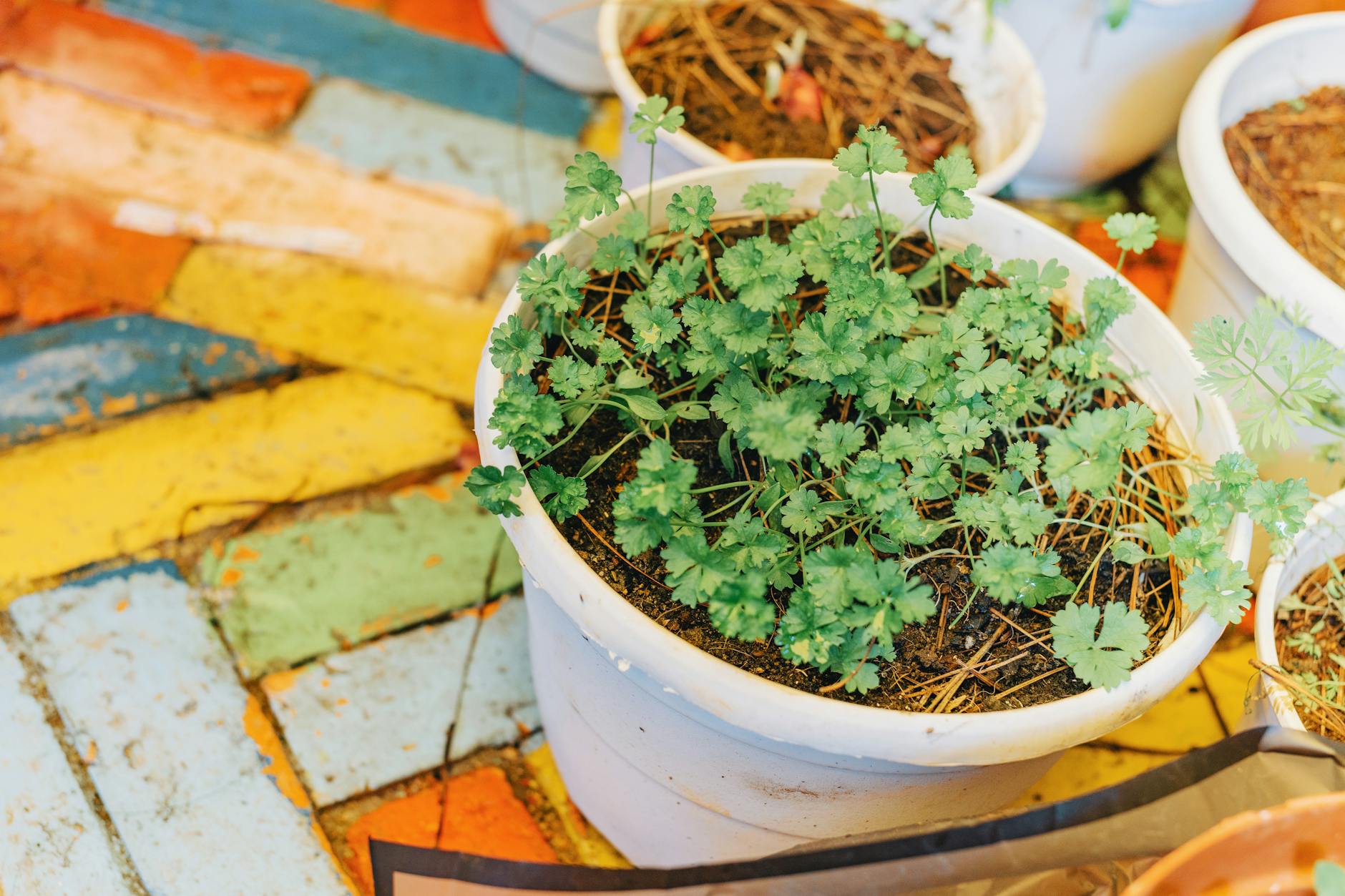
These herbs can tolerate a wider range of conditions but still benefit from good aeration. Parsley needs consistent moisture but dislikes sitting in soggy conditions. Chives are relatively robust and handle moderate fluctuations well. These plants integrate nicely into most standard, well-draining container setups.
Pest and Disease Management in Container Settings
The dense, confined nature of container gardening means that pests and diseases can spread rapidly between pots if not managed proactively. A healthy soil and balanced nutrition provide the best defense against many issues, but vigilance remains necessary in an urban environment where pest populations can be concentrated.
Inspect your herbs daily. Look under the leaves for early signs of aphids or spider mites, which thrive in warm, still air pockets common near walls. A strong plant, well-fed with appropriate nutrients from healthy soil, will naturally resist minor attacks. If infestations do occur, a strong stream of water can physically dislodge smaller pests. For persistent problems, introducing beneficial insects like ladybugs into the area—if permissible—can help manage populations naturally.
Sustaining the Container Herb Ecosystem Long-Term
The long-term success of an urban herb garden hinges on creating a self-sustaining cycle. This means understanding that container gardening is an ongoing process of observation and adjustment, not a one-time setup.
Regularly assess how water flows through your system. Note which pots dry out fastest and which retain moisture longest. Adjust watering schedules based on these real-world observations. Feed the plants periodically with diluted liquid organic fertilizer to replenish the nutrients depleted by continuous harvesting. This consistent feeding reinforces the cycle of growth and productivity within your small space. By treating your container herbs as living systems demanding specific inputs—water, light, and balanced soil chemistry—you move beyond simple horticulture toward true urban agricultural mastery.
Tags: container gardening, urban gardening, herb growing, balcony gardening, small space gardening, container herbs, culinary herbs
Featured Image by FOX ^.ᆽ.^= ∫ on Pexels.