
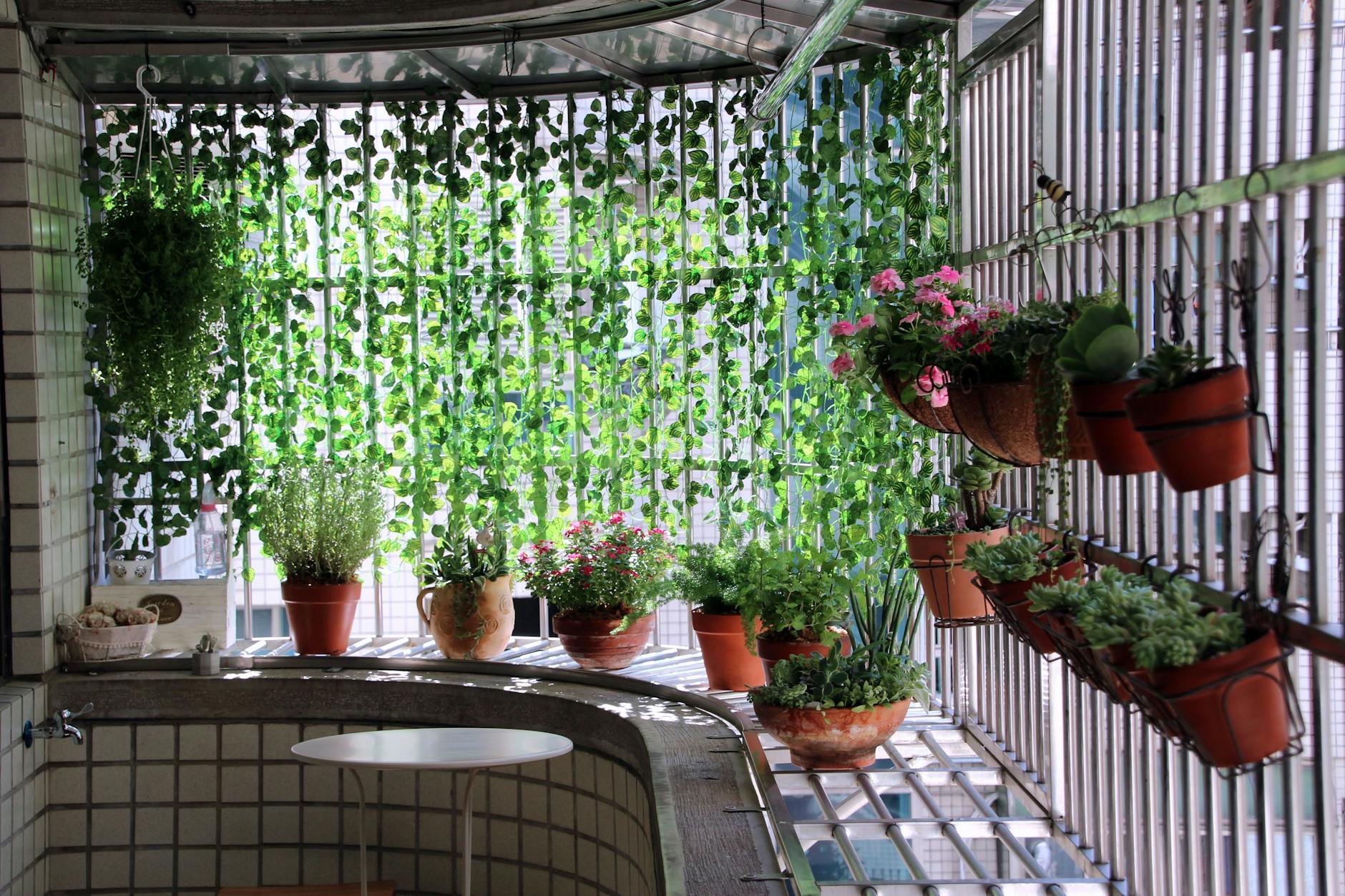
Engineering Space: Maximizing Cultivation Density
When confronting the spatial constraints of an urban environment, the strategy shifts from traditional horizontal planting to vertical integration. We observe that surface area is finite; therefore, maximizing usable growing real estate necessitates utilizing the vertical plane. This approach fundamentally alters how we conceptualize cultivation in small balconies, narrow patios, or even against exterior walls. The mechanism at play here is simple geometry: by stacking containers, we convert wasted airspace into productive growing volume.
This transition demands a focus on structural integrity as much as horticultural technique. A system built to support saturated soil and moisture retention must resist the differential loads imposed by saturated potting media and water weight. We are not simply hanging pots; we are engineering load-bearing systems for living organisms. Understanding material stress points dictates whether a makeshift wooden pallet system will fail prematurely or provide stable support over an extended growing season.
Selecting the Right Vertical Infrastructure
The choice of vertical structure dictates the entire operational envelope of the garden. Some solutions prioritize aesthetic integration, while others focus purely on functional capacity and material availability. We see several viable approaches emerge when analyzing practical implementation scenarios.
Pallet Systems: Reimagining Found Materials
Wooden pallets offer a readily available starting point for many urban gardeners. The inherent structure provides pre-cut beams that can be adapted into tiered shelving or hanging racks. However, the structural integrity of standard shipping pallets requires careful assessment before deployment. We must calculate the load-bearing capacity based on the weight of the saturated soil and water, factoring in the density of the wood itself. If you opt for this method, securing the structure to a solid wall or railing becomes non-negotiable to prevent catastrophic failure due to shifting forces.
The process involves treating these materials correctly. Exposure to constant moisture accelerates wood rot, which compromises the long-term viability of your vertical system. Proper treatment involves using non-toxic sealants and ensuring adequate airflow around the containers to mitigate fungal growth. This requires a deeper understanding of material science applied to gardening.
Hanging Planter Solutions: Maximizing Airflow
Hanging systems excel where direct structural support is minimal, often utilizing existing railings or balcony supports. Utilizing sturdy ropes, chains, or specialized brackets allows plants to cascade downwards efficiently. The key observable factor here is root aeration; roots thrive when not suffocated by dense, stagnant air pockets. Designing the hang points requires an assessment of ambient temperature fluctuations and wind resistance. A system that sways excessively during high winds introduces unnecessary mechanical stress into the container and the plant itself.
We find that lightweight, durable materials for the hanging apparatus are superior to heavy, cumbersome hardware. The goal is creating a living trellis rather than simply suspending objects. This method demands precise calculation regarding the weight distribution across the attachment points.
Optimizing Substrate Management
The success of any vertical setup hinges entirely on the medium used to cultivate the plants. In confined spaces, soil volume is precious, meaning the substrate must offer maximum nutrient delivery while minimizing unnecessary bulk. Using a standard garden mix often results in overly dense, poorly draining conditions when constrained within narrow containers.
We advocate for custom formulations when working with vertical systems. A tailored potting mix allows us to precisely control the porosity and water-holding capacity necessary for specific plant species attempting to thrive in these elevated settings. When we analyze the data from soil science, we recognize that drainage rate is a critical determinant of root health, especially when utilizing stacked containers where runoff management becomes complex. Investing time in formulating your medium pays dividends in yield consistency. Referencing guides on Custom Potting Mix: The Ultimate Guide for Urban Garden Soil provides the necessary framework for achieving this precise chemical balance.
Implementing Smart Water Delivery
Managing irrigation efficiently is another significant challenge in vertical gardening. In multi-tiered systems, water delivery must account for gravity and potential flow restrictions across multiple levels simultaneously. Relying solely on manual top-ups becomes inefficient, leading to inconsistent watering schedules that stress plants at the top while the lower levels suffer from overwatering or desiccation.
The implementation of automated mechanisms addresses this inefficiency directly. Installing DIY self-watering systems for balcony containers provides a scalable solution for managing water reserves independently within each vertical unit. These systems utilize wicking principles to maintain consistent soil moisture levels by drawing water from a reservoir below, effectively creating localized microclimates that resist environmental fluctuations. This reduces the labor input while ensuring that the root zone receives optimal hydration regardless of access difficulty.
Maximizing Light Exposure and Plant Selection
Vertical placement inherently changes the light environment compared to ground-level planting. Sunlight intensity shifts depending on the angle of the structure, meaning plants at the very top may receive less direct intensity than those below them. We must analyze the shadow patterns cast by adjacent structures or foliage to map out the daily photoperiod precisely.
This analysis guides plant selection. Shade-tolerant varieties perform better in areas receiving indirect or dappled light that might occur between stacked layers. Conversely, plants requiring intense, direct sun should be positioned at the highest accessible tiers where light penetration is maximized. Understanding these spatial light gradients prevents yield loss caused by suboptimal photosynthetic rates.
The Yield Multiplier Effect
The ultimate metric for successful vertical gardening is the realized yield per square foot of footprint. Because we are vertically stacking cultivation zones, the effective growing area multiplies exponentially compared to traditional methods. This increased density means that even small balconies can support a significantly larger biomass of edible produce. We observe that when space constraints are managed through structural ingenuity and optimized substrate management, the productivity ratio improves dramatically.
The initial investment in thoughtful design—selecting appropriate hardware, formulating superior soil, and implementing smart watering techniques—is an upstream factor that determines the downstream success. It is not about simply cramming more plants into a small area; it is about engineering a highly efficient cultivation system where every component works synergistically toward maximizing caloric output from minimal real estate. We move beyond simple gardening into applied spatial optimization.
Tags: vertical gardening, urban gardening, small space gardening, hanging planters, pallet gardens, apartment gardening, container gardening
Featured Image by 東森 傅 on Pexels.