
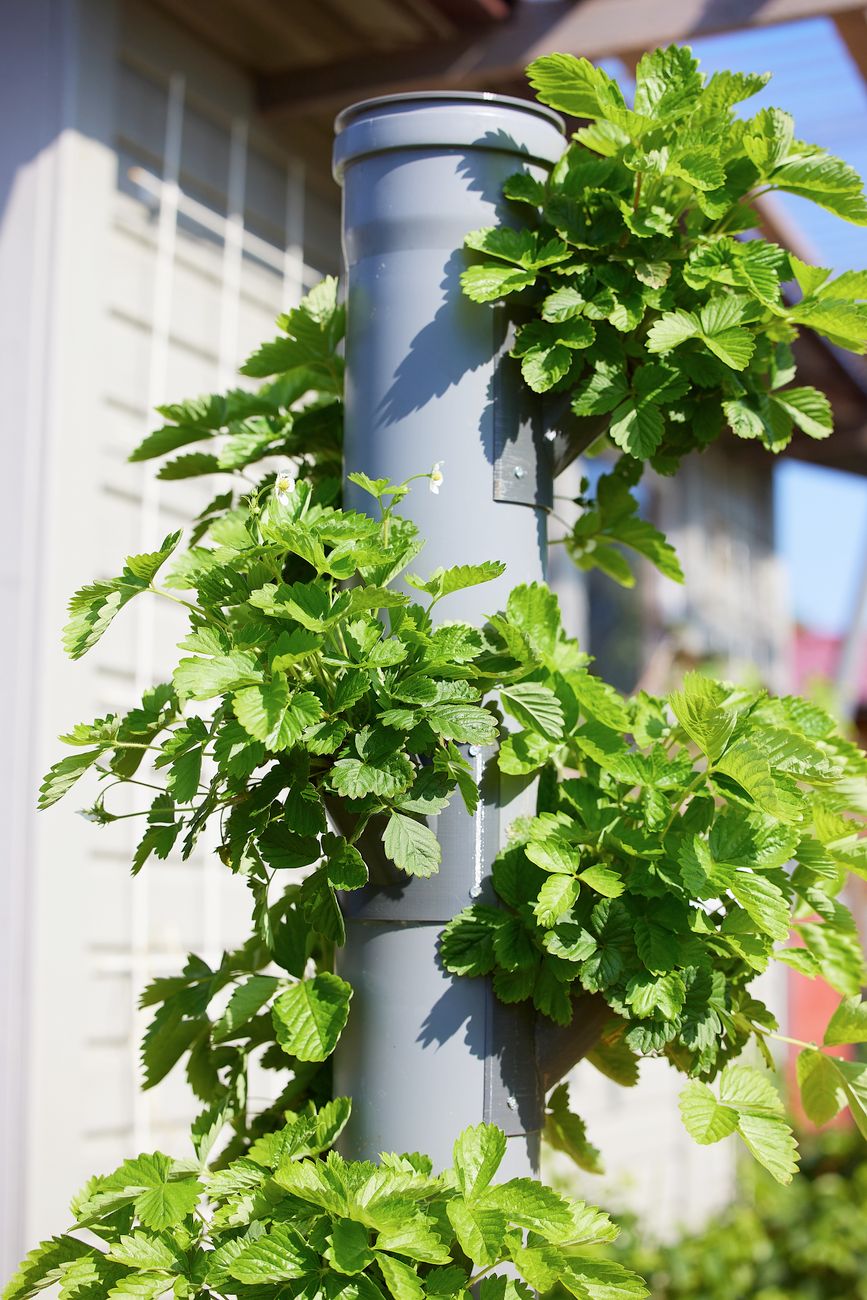
The Physics of Vertical Growth: Optimizing Space Utilization
When confronting limited square footage in an urban environment, the traditional horizontal gardening model becomes fundamentally inefficient. We observe that maximizing edible yield necessitates a vertical approach; this is a direct application of geometric necessity. Instead of relying solely on ground space, we must engage the three-dimensional volume available to us. This shift moves the constraint from area limitation to structural potential. Understanding how plants interact with gravity and substrate layers becomes the primary mechanism for successful vertical vegetable gardening.
The rationale behind stacking cultivation is simple: increasing surface area exposure without increasing the footprint on the floor. Consider a typical balcony or a small patio; these spaces are inherently constrained. By implementing vertical structures, we transform unused wall space or railings into productive growing zones. This strategy directly addresses the density challenge inherent in city living. We are not simply placing pots next to each other; we are engineering a system where each square inch of potential surface is actively utilized for photosynthesis.
Structural Mechanics of Vertical Systems
The success of any vertical system depends entirely on the load-bearing capacity and the chosen mounting method. We must assess the material upon which the gardening structure rests before initiating planting. Wood, concrete, or sturdy metal framing dictate the maximum weight each vertical plane can safely support. Poor structural choices introduce risk; a failure in the support mechanism translates directly into crop loss.
We analyze various mounting techniques based on their application to residential urban settings. Pallet systems, for instance, offer a readily available, scalable framework for creating tiered shelving units. These structures allow for sequential layering of containers, each layer providing an independent growing environment. Conversely, pocket systems, utilizing fabric or felt, distribute the weight more evenly across the mounting surface, which is beneficial when dealing with less robust external walls.
The choice of container material also plays a significant role in water management and root health within these confined spaces. Lightweight plastic or fabric grow bags allow for rapid moisture exchange, which mitigates the risk of overwatering common in shallow containers. When selecting your primary vessels, consider how they interact with the substrate you intend to use below them.
Optimizing Substrate and Water Flow
The medium filling these vertical tiers requires specific attention because water management becomes a critical engineering problem at this scale. In traditional gardening, soil retains moisture within a defined volume; here, we manage flow across multiple independent layers simultaneously. We observe that the substrate used in vertical setups must offer excellent drainage to prevent root asphyxiation, especially when plants are densely packed against a wall.
We find that using a high-quality potting mix formulated for container gardening is non-negotiable. This soil must balance water retention with aeration; dense, heavy mixes impede necessary oxygen exchange for the roots. For instance, incorporating perlite or coarse sand into your growing medium increases porosity, allowing water to penetrate rapidly and ensuring that root systems develop robustly rather than remaining waterlogged.
Water delivery in vertical setups requires a thoughtful design. Gravity assists the flow down the structure, but we must engineer the system so that water reaches the lowest tiers effectively without causing runoff damage higher up. Implementing a drip or recirculating system, even on a small scale, becomes an operational necessity when maximizing yield from limited resources.
Maximizing Yield Through Strategic Planting Density
The primary goal of vertical vegetable gardening is to increase biomass per unit of surface area. This demands a shift away from traditional spacing and towards intensive, strategic planting patterns. We analyze how plant selection dictates achievable density in these constrained environments. Not all vegetables thrive under the same spatial constraints; some require deep roots and substantial soil volume, while others tolerate shallower substrates.
Leafy greens, such as lettuce, spinach, and kale, are excellent candidates for vertical systems because their growth habit is relatively shallow, meaning they can efficiently utilize shallower substrate layers. We observe that continuous harvesting of these crops allows the system to remain productive throughout the season. You can layer different varieties sequentially; placing fast-growing herbs above slower-growing root vegetables creates a dynamic, multi-tiered harvest schedule.
Root vegetables, like carrots or radishes, present a greater challenge because their expansion requires deeper substrate penetration. If you are employing a vertical strategy for root crops, you must utilize specialized, deep containers rather than relying solely on shallow shelving. This raises the question of whether the physical structure itself can accommodate the necessary root depth without compromising stability.
We look at companion planting within these dense structures to manage resource competition effectively. Intercropping certain plants with others allows them to share resources and occupy different vertical niches. For example, placing vining plants alongside determinate tomatoes allows the vine to utilize the available vertical space efficiently while providing supportive structure for the fruit production below.
Selecting Appropriate Plant Profiles
The biological requirements of the chosen flora must be mapped precisely onto the physical constraints of the garden architecture. We must match plant physiology with structural capacity. Some plants, like certain fruiting vegetables, require substantial lateral support to prevent stem collapse under their own weight when grown vertically against a wall. This necessitates selecting robust trellising techniques integrated into the shelving design.
When considering flowering or aromatic additions, integrating pollinator-attracting species enhances the overall ecological value of the urban garden. Placing flowering herbs near vegetable crops attracts beneficial insects, which naturally control pests, reducing the reliance on external treatments. Exploring options like balcony flowers demonstrates how aesthetic and functional goals can intersect beautifully within a small footprint. For instance, incorporating fragrant blossoms helps establish a micro-ecosystem that supports the entire system’s health.
We must also account for light exposure gradients. Walls facing north receive less intense, diffuse light than south-facing exposures; this dictates which crops you place where in your vertical arrangement. Positioning sun-loving plants on the most illuminated surfaces ensures their photosynthetic machinery operates at peak efficiency. Our analysis suggests that mapping light patterns is as crucial as managing water and substrate composition for optimal yield realization.
Operationalizing Your Vertical Strategy
Implementing a successful vertical garden transitions from a conceptual design to an ongoing management process. The initial setup merely establishes the framework; sustained productivity depends on meticulous attention to daily operational mechanics. This involves managing the dynamic interplay between light, moisture, and nutrient delivery across all levels simultaneously.
Monitoring moisture levels is perhaps the most immediate task. Because water evaporates more quickly from surfaces exposed to air currents or direct sunlight, systems must be checked with greater frequency than traditional ground gardens. We observe that the containers in vertical setups can dry out rapidly if not managed proactively. Implementing a consistent watering schedule based on substrate saturation—not arbitrary time intervals—ensures optimal hydration for every plant stratum.
Nutrient delivery requires a tailored approach specific to the density of the planting. Because plants in dense vertical arrangements draw water and nutrients from a shared, limited volume, they require consistent feeding. We must establish a nutrient solution that is balanced for the specific growth stage of the vegetables being cultivated. This involves understanding the mineral demands of different plant families; leafy greens require higher nitrogen concentrations than fruiting plants demanding potassium and phosphorus.
The long-term viability of vertical vegetable gardening hinges on continuous observation and iterative adjustment. We look at the system as a living entity that requires responsive maintenance rather than static placement. Adjusting the position of trays to account for shifting light angles, replenishing depleted water reserves, and feeding based on real-time growth metrics are the actions that convert potential into actual harvest. This process transforms the act of gardening from passive cultivation into active systems engineering.
Tags: vertical gardening, urban gardening, living walls, small space gardening, vegetable yields, vertical farming, container gardening
Featured Image by Thomas Mengwasser on Pexels.