
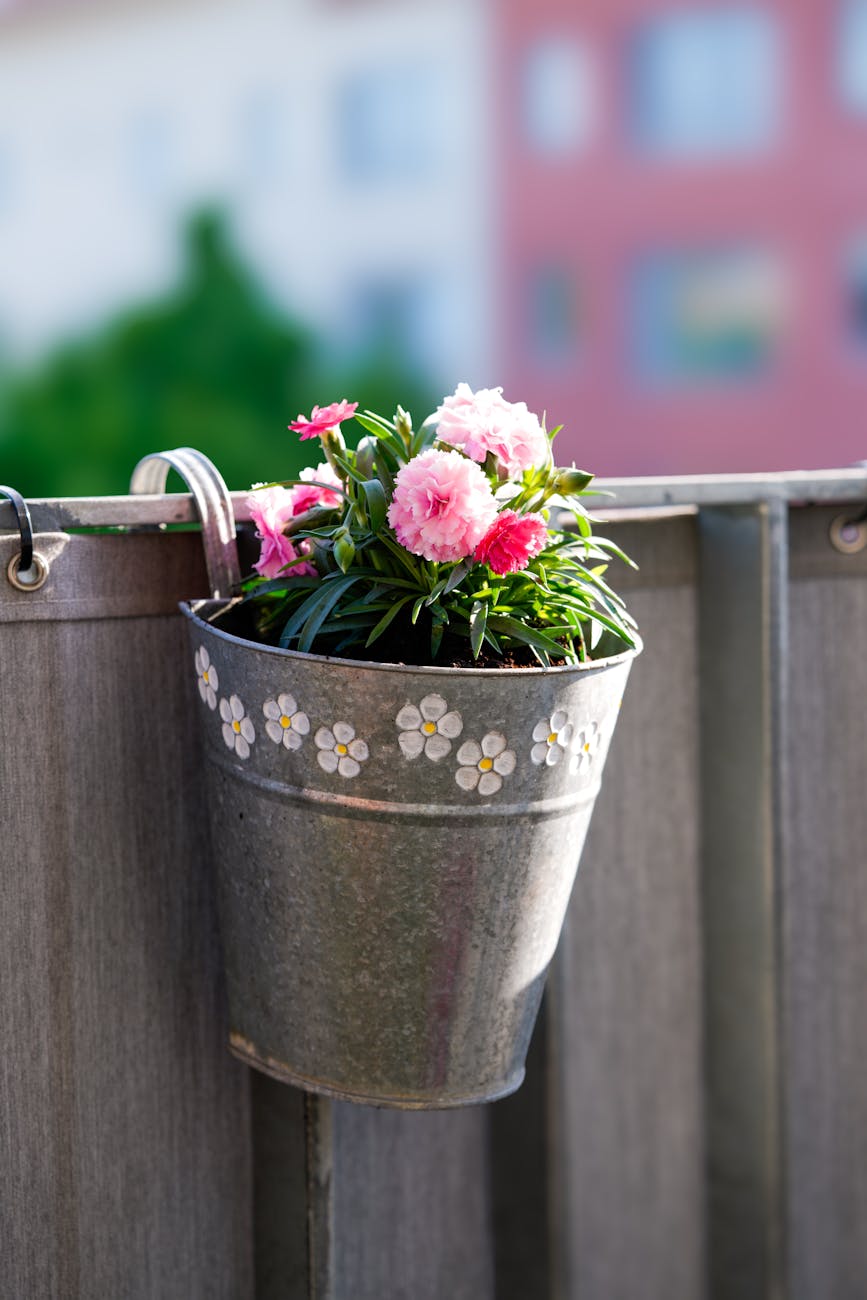
Mastering Vertical Space: Maximizing Yield on Limited Balcony Real Estate
The constraint of small urban spaces immediately shifts gardening from a simple act of planting to a complex exercise in spatial engineering. When dealing with balcony gardening flowers, we are not just placing pots; we are manipulating light exposure, water retention, and root space within severe physical limitations. We observe that the primary limiting factor is rarely the desire for blooms themselves, but the inefficient utilization of three-dimensional volume. Effective strategies demand a systematic approach to verticality.
We need to analyze how different structural elements can be leveraged. Railings, walls, and balcony ceilings offer surfaces previously untapped by traditional ground-level horticulture. The mechanism here involves creating interconnected growing planes rather than isolated containers. This architectural approach fundamentally changes the flow of resources, allowing plants to compete more effectively for light and air circulation.
Engineering Your Vertical Garden Layout
The choice of vertical structure dictates the viability of the entire system. Railing planters, for instance, offer immediate access to a high-visibility growing area. However, we must consider the physical load capacity of the railing itself before selecting materials or mounting systems. A common mistake involves ignoring weight management; soil, water, and mature plant biomass accumulate substantial weight. We calculate this stress point precisely to prevent structural failure while ensuring the root systems remain aerated.
We see a strong correlation between plant density and overall system health. Overcrowding leads to root competition, reduced nutrient uptake efficiency, and increased susceptibility to fungal diseases because airflow is restricted. Therefore, spacing must be calculated based on the specific needs of the chosen species, not just arbitrary visual appeal. Think about the canopy spread; wide-leafed plants require more lateral support than compact annuals.
Implementing Railing Planters Effectively
Railing planters are popular because they utilize an already existing boundary structure. The key to their success lies in selecting lightweight yet durable containers and ensuring proper drainage. Water pooling at the base creates anaerobic conditions, which rapidly inhibits root respiration. We must engineer drainage pathways; this often involves layering materials within the planter base to facilitate rapid water egress while retaining necessary moisture.
We also examine the substrate selection in these constrained environments. The soil mix directly impacts the plant’s ability to manage limited resources. Using a standard garden loam without modification can lead to compaction when placed against a railing structure, inhibiting root expansion. Research suggests that specialized mixes perform better in shallow, vertical systems. For instance, understanding the mechanics of soil porosity is critical; dense, poorly aerated soil suffocates roots quickly. We strongly recommend consulting guides on the best soil mix for container gardening and urban vegetables to ensure optimal water dynamics.
Optimizing Light Capture Mechanisms
Light is the fundamental currency of plant life, and in a balcony setting, light exposure is highly variable based on the orientation of the balcony, surrounding buildings, and neighboring structures. Understanding solar paths allows us to position our flowering plants strategically throughout the day. We must treat sunlight as a dynamic resource that changes hourly.
East-facing balconies receive gentle morning light, ideal for plants needing moderate illumination. Western balconies experience intense afternoon heat, demanding plants with high tolerance for sustained, bright conditions. South-facing areas offer the most consistent, intense exposure throughout the day.
We observe that plant selection must align directly with this measured light profile. Tomatoes or certain sun-loving annuals thrive where maximum intensity is guaranteed. Conversely, shade-tolerant flowers, such as impatiens or begonias, perform optimally in areas receiving dappled or indirect light. Positioning plants requires continuous monitoring; moving them seasonally might be necessary to compensate for shifts in ambient light levels.
Weight Management: The Non-Negotiable Factor
The physical load imposed by water-saturated soil and living biomass is arguably the most pressing engineering challenge in balcony gardening flowers. Ignoring this factor invites structural failure, which is unacceptable. We must treat the container system as a load-bearing unit. This necessitates using lightweight, high-strength materials for planters and ensuring that any vertical support structure is rated appropriately for the anticipated weight.
We calculate the dead load—the weight of the empty planter—and add the live load—the weight of the soil and saturated plants—to determine the total stress on the railing or mounting points. This calculation moves the process from guesswork to applied physics. If using hanging systems, tension and anchor points must be assessed for their capacity to handle dynamic loads, especially when factoring in wind resistance during high-wind events common in urban settings.
Selecting Appropriate Plant Forms for Verticality
Not all flowering plants scale well across vertical planes. We must select species that exhibit a growth habit amenable to constrained space. Trailing varieties, vines, and cascading blooms are inherently superior for maximizing vertical potential because they utilize the available height rather than just the horizontal footprint.
For example, petunias or calibrachoa offer dense coverage and bloom profusely when trained over a railing. They develop strong stems that can be easily guided along wires or trellises. We avoid plants with excessively sprawling root systems or deep taproots unless the vertical structure provides ample depth for them to anchor securely. The morphology of the chosen plant dictates its success in this constrained geometry.
Creating Self-Sustaining Systems
True balcony gardening success involves establishing closed-loop systems where water and nutrients are managed efficiently within the confined space. Running separate, small-scale hydroponic or self-watering setups can mitigate the risk associated with soil saturation and inconsistent watering schedules inherent to container systems. This level of control reduces waste and optimizes resource allocation for high-yield balcony gardening flowers.
We see that efficient irrigation is paramount. Implementing drip systems or recirculating containers minimizes evaporative loss, which becomes a critical issue when plants are exposed to intense sun on an exposed balcony. Monitoring soil moisture content directly prevents both underwatering stress and the risk of root rot associated with overwatering. This constant feedback loop allows us to adjust water delivery precisely to the plant’s current physiological demand.
The combination of careful spatial planning, light assessment, structural load awareness, and optimized substrate management transforms a simple balcony into a productive micro-ecosystem. We move beyond simply placing pots onto a surface; we are designing an integrated horticultural system that exploits every available cubic inch. This analytical approach ensures that the results observed in practice yield maximum floral production sustainably.
Tags: balcony gardening, urban gardening, small space gardening, vertical gardening, balcony planters, flower growing, apartment gardening
Featured Image by Damir K . on Pexels.