
The Chemistry of Container Success
When transitioning from traditional in-ground gardening to container settings, the substrate ceases to be merely dirt; it becomes a complex, living medium where every physical and chemical interaction dictates plant viability. We observe that plants in pots experience drastically altered water retention dynamics compared to those situated in deeper soil profiles. This fundamental shift necessitates a targeted approach to soil amendments because the limited volume amplifies the consequences of any imbalance within the root zone. Understanding this mechanism is the first step toward maximizing yields in these confined spaces.
The primary challenge in container gardening is that the soil itself offers minimal buffering capacity against rapid nutrient depletion and excessive water fluctuation. Plant roots explore a much smaller volume, meaning that soluble nutrients are quickly exhausted, and the physical structure of the soil dictates aeration and drainage far more intensely than in a large bed. Therefore, applying appropriate container soil amendments moves beyond simple fertilization; it is about engineering an environment where optimal nutrient uptake and root respiration can occur consistently throughout the growing season.
Optimizing Water Dynamics Through Soil Structure
The physical architecture of the potting mix directly governs how water moves through the system. Dense, heavy mixes impede the necessary aeration that roots require for aerobic respiration, leading to root asphyxiation and subsequent decline in photosynthetic efficiency. We need a substrate structure that balances water holding capacity with sufficient porosity.
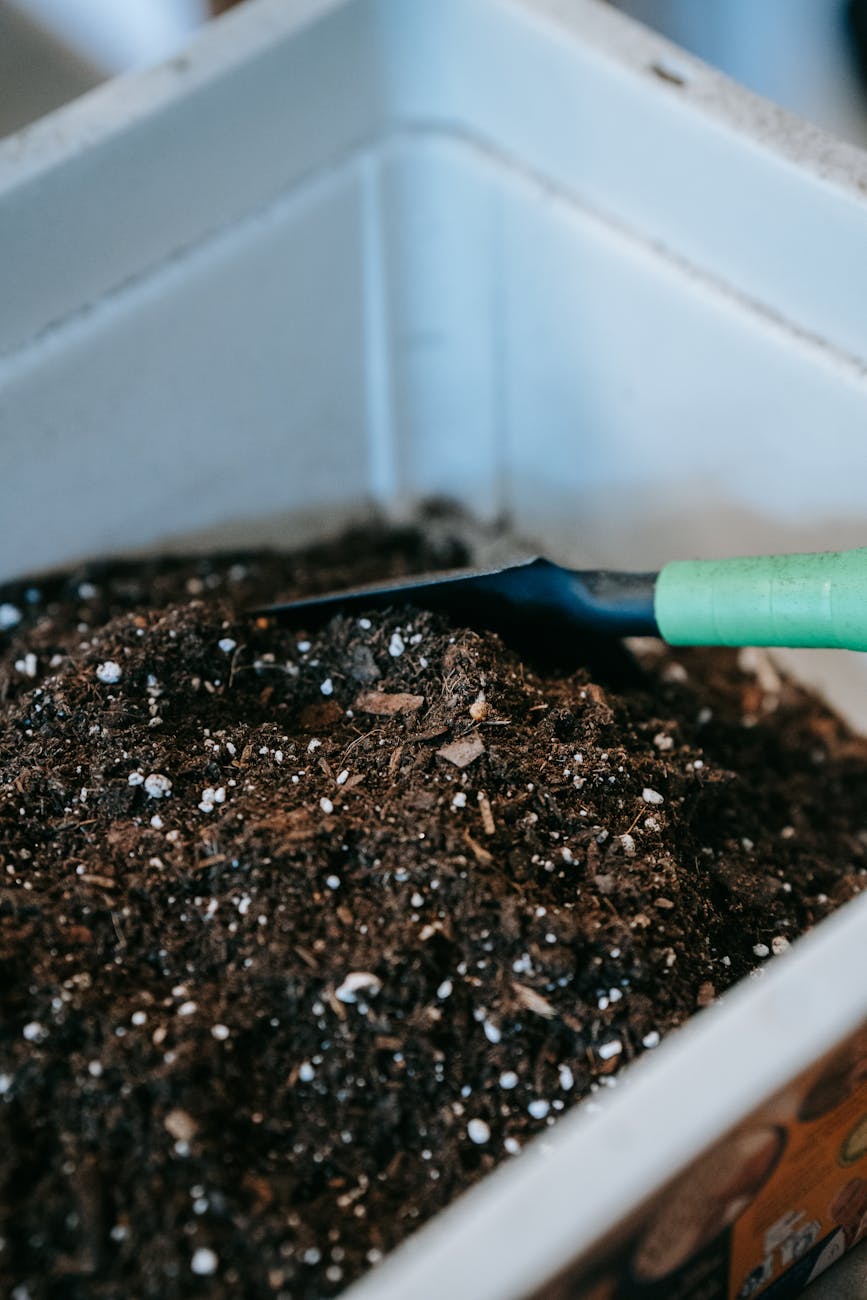
We analyze the role of components like perlite or coarse sand within our amendments. These materials introduce macroscopic air pockets into the medium. This physical structure facilitates rapid drainage away from the root ball while simultaneously ensuring that water is distributed evenly across the entire root mass, preventing localized saturation. In practice, a mix incorporating adequate aeration agents allows roots to breathe effectively, which directly correlates with faster nutrient assimilation. We see this effect most clearly when plants are subjected to fluctuating watering schedules; well-aerated soil handles these changes more resiliently than dense, waterlogged mixtures.
Nutrient Delivery Mechanisms in Potting Media
Nutrient delivery is not passive; it is an active biochemical process dependent on the medium’s composition and the plant’s physiological demands. Container gardening requires careful management of nutrient availability because leaching occurs rapidly from small volumes. We must ensure that essential macro- and micronutrients are available in soluble forms, ready for immediate uptake by the roots.
Standard garden soil often possesses a complex mineral profile that can inhibit optimal nutrient uptake when confined to containers. Therefore, we focus on amendments that provide slow-release mechanisms alongside readily available nutrients. Organic matter, derived from compost or aged manure, serves this dual function beautifully. It acts as a slow-release reservoir for essential minerals while simultaneously improving the soil’s cation exchange capacity (CEC), which enhances the medium’s ability to hold onto positively charged nutrient ions, preventing immediate washout.
Selecting the Right Amendments for Specific Goals
The ideal container soil amendments strategy depends entirely on the specific plant species and the desired outcome. Tomatoes, for instance, demand consistent, high-level feeding due to their heavy fruiting demands. Conversely, herbs often thrive with leaner, well-draining compositions. Our analysis suggests tailoring the amendment ratio is crucial for avoiding nutrient toxicity or deficiency in these small systems.
Enhancing Nutrient Retention and Buffer Capacity
To combat rapid leaching, increasing the organic fraction of the mix is paramount. Incorporating high-quality compost significantly increases the soil’s water-holding capacity without sacrificing necessary porosity. This layered approach means the medium functions as a sponge for moisture while maintaining sufficient air space for root respiration. When we examine plant health data in small pots, we consistently find that amended soils exhibit lower rates of nutrient fluctuation over the growing cycle compared to inert mixes.
Addressing pH and Mineral Availability
Soil pH dictates the solubility and availability of essential minerals. Many common container potting mixes are formulated for general use but do not account for specific mineral needs. Adjusting the pH through amendments like dolomitic lime or elemental sulfur directly manipulates this chemical environment. For instance, if we observe symptoms of iron chlorosis in leafy greens, it signals an issue with nutrient availability rooted in soil chemistry rather than a simple lack of fertilizer application. We must monitor and adjust these parameters actively.
Integrating Companion Strategies for Holistic Growth
The success of any container garden extends beyond the physical medium itself; it involves understanding the symbiotic relationships between plants sharing the same limited space. Introducing companion planting principles allows us to manipulate microclimates and nutrient competition effectively within tight boundaries.
Companion planting leverages the concept that neighboring plants influence each other’s growth patterns, light interception, and pest resistance. By strategically placing certain species next to others, we can create an integrated system where resources are utilized more efficiently across the available surface area. For example, positioning certain aromatic herbs near vegetables can naturally deter common garden pests without relying solely on chemical interventions. This ecological approach complements the chemical adjustments made to the soil structure.
When considering what thrives together, understanding light needs is also critical. Plants situated in containers often experience intensified light exposure, which accelerates metabolic rates and demands more robust nutrient support. When selecting plants for these environments, assessing their light requirements alongside their root system density provides a necessary framework for successful placement. We look to resources on topics like Container Gardening for Color: Choosing Urban Flower Pots as an example of how container selection impacts overall plant performance, which informs our choice of amendments and companions.
Practical Application: A Framework for Container Soil Amendments
Developing a reliable system requires moving from theoretical knowledge to practical application. We must establish a repeatable process for formulating the perfect mix before introducing any seeds or seedlings into those small pots. This involves assessing the desired outcome—whether it is high-yield fruiting, robust foliage, or resilient herb growth—and then selecting amendments accordingly.
We observe that a standard, highly effective formulation often involves blending a base material, an aeration agent, and a nutrient source. The ratio between these components determines the final performance characteristics. For instance, a mix aimed at maximizing tomato yield might favor high-quality compost heavily mixed with a slow-release organic fertilizer to ensure sustained feeding. A mix designed for fast-growing annuals might prioritize a higher proportion of perlite or vermiculite to guarantee superior drainage and aeration.
This process demands continuous observation. After the initial growth phase, analyzing root health and subsequent yield data allows us to refine our amendment protocols for future seasons. We are not dealing with a static formula; we are engaging in an iterative experiment based on observed biological responses within the small confines of the container. Mastering container soil amendments is fundamentally about mastering the physical, chemical, and biological interplay occurring beneath the surface.
Tags: container gardening, soil amendments, small space gardening, potting mix, container gardening tips, urban gardening, plant nutrition
Featured Image by Sasha Kim on Pexels.