
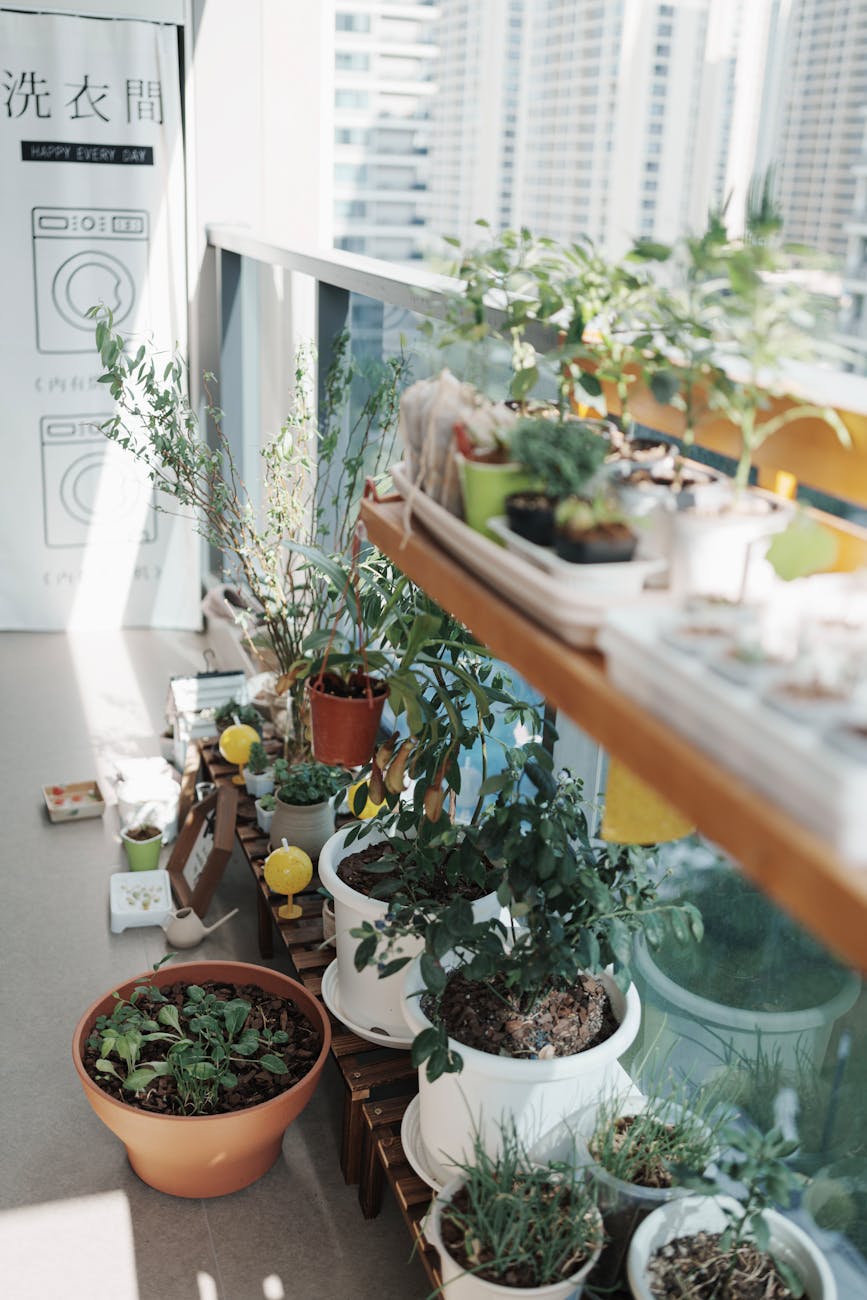
Optimizing Plant Selection for Constrained Urban Spaces
The decision of what to grow on a balcony is not merely aesthetic; it involves a precise assessment of microclimatic variables and spatial constraints. We are dealing with an engineered environment where resources—sunlight, wind exposure, and physical footprint—are finite commodities that dictate plant viability. Selecting the right urban balcony gardening plants requires moving beyond simple preference and engaging in environmental analysis. Our goal is to maximize photosynthetic potential while mitigating the stresses inherent to container living.
Analyzing Your Balcony’s Environmental Profile
Before introducing any species, one must map the physical reality of the space. Sunlight exposure acts as the primary limiting factor for plant metabolism; we observe that south-facing balconies receive the most intense, prolonged light, whereas north-facing areas offer cooler, diffused illumination suitable for shade-tolerant varieties. Wind exposure also matters significantly. High winds accelerate evapotranspiration rates, stressing delicate root systems and physically damaging foliage, making sheltered corners preferable for plants with shallow roots or tender stems.
We must quantify these factors. Track how many hours the space receives direct sun throughout the day and observe wind patterns during peak growing seasons. This empirical data replaces guesswork. Understanding these kinetic inputs allows us to select species that are inherently adapted to those specific conditions, reducing the need for constant, stressful intervention.
Soil and Container Mechanics: The Foundation of Success
The substrate inside a container functions entirely differently than in-ground soil; it becomes a finite reservoir that must manage water retention, nutrient delivery, and aeration. Poor drainage leads directly to root asphyxiation, a common failure point in urban settings. Therefore, the choice of container material and growing medium is inseparable from plant selection.
When establishing your system, consider the mechanics of containment. Terracotta, for instance, allows for evaporative cooling but dries out rapidly, demanding more frequent watering cycles than porous materials like coco coir blends. The volume available directly impacts the root mass capacity; a plant requiring deep roots demands a larger container to prevent stunted growth and nutrient lockout. We find that utilizing appropriate substrate mixtures is critical; utilizing a high-quality potting mix with adequate aeration prevents compaction and facilitates the necessary gaseous exchange for healthy root respiration. For detailed instructions on managing these physical boundaries, reviewing guides on Container Gardening for City Dwellers: Pots, Soil & Drainage Guide offers essential process knowledge.
Selecting High-Yield Urban Balcony Gardening Plants
The selection process narrows down to plants whose biological requirements align with the observed environmental parameters. We focus on maximizing yield density within limited square footage, prioritizing edibles and ornamentals that thrive in container constraints.
Sun-Loving Species for Intense Exposure
Plants requiring high light intensity benefit from balconies oriented toward the south or west. These species exhibit robust growth rates when supplied with ample energy. Tomatoes, peppers, and most fruiting vegetables fall into this category. They demand consistent moisture and rich nutrient profiles to support their high metabolic demands. Basil, a culinary favorite, thrives in this intense light, provided adequate drainage is maintained within the container. Observation shows that these plants rapidly deplete available resources if the soil composition is inadequate for their needs.
Shade-Tolerant Choices for Diffused Light
For balconies receiving dappled or indirect light, shade-tolerant options offer viable alternatives. Leafy greens, such as spinach and lettuce varieties, perform exceptionally well in these conditions. They require less intense energy than fruiting vegetables but still demand consistent moisture to prevent bolting—the process where the plant redirects energy into flowering rather than leaf production. Herbs like mint, while vigorous, also tolerate partial shade effectively if they receive sufficient hydration. We see that manipulating light exposure is a direct lever on the plant’s growth habit.
Managing Vertical Space and Companion Dynamics
Because horizontal space is severely restricted, vertical gardening techniques become essential for optimizing density. Trellising cucumbers or climbing beans utilize vertical plane to increase photosynthetic surface area dramatically. This strategy maximizes yield per square meter by addressing the three-dimensional constraint of the balcony. Furthermore, understanding plant interactions allows us to engineer symbiotic relationships within the small space. Companion planting involves placing specific species near each other to influence growth patterns and resource sharing. For instance, placing basil near tomatoes has been shown in practice to enhance flavor profiles and deter certain pests, optimizing the overall yield from a limited area by leveraging natural ecological processes. Explore strategies for this synergy in Companion Planting for Bigger Yields in Small Urban Gardens.
Adapting to Wind and Temperature Fluxes
The kinetic elements of the urban environment—wind and temperature fluctuations—introduce dynamic stress factors that must be factored into plant selection. Strong, persistent winds increase water loss through transpiration at an accelerated rate; this necessitates plants with more resilient stem structures or those capable of rapid recovery from desiccation. We observe that plants with dense foliage and lower profiles tend to fare better in exposed areas than tall, spindly varieties.
Temperature shifts also influence growth cycles. Plants selected for a specific season must be acclimated to the local climate patterns observed throughout the year. A plant chosen for summer fruiting will experience stunted or necrotic tissue if subjected to unexpected early frosts. This demands careful timing; starting seeds indoors allows growers to synchronize the planting timeline with the actual onset of favorable growing conditions, mitigating risk associated with unpredictable microclimates.
Nutrient Delivery and Maintenance Protocols
The volume limitations of balcony containers mean that nutrient delivery must be precise and frequent. Plants in confined spaces exhibit rapid uptake rates when conditions are optimal, meaning a consistent feeding schedule is non-negotiable for sustained productivity. Over-fertilization, especially with high-nitrogen formulas, can lead to lush foliage but poor fruit development, as the plant prioritizes vegetative growth over reproductive output under nutrient imbalance.
We must manage the concentration of macro and micronutrients carefully. The initial soil composition sets the baseline, but subsequent feeding adjustments reflect the dynamic demands of the growing season. Monitoring soil moisture levels daily allows for precise assessment of water stress before visible symptoms appear in the foliage. This proactive monitoring shifts maintenance from reactive problem-solving to predictive environmental management.
The continuous process of growth demands attention to plant density and interaction. Managing neighboring plants effectively prevents competition for light and nutrients, which is a subtle but powerful aspect of successful small-scale cultivation. The goal becomes creating an intentionally balanced ecosystem where each element contributes positively to the whole, rather than competing against one another.
Tags: balcony gardening, urban gardening, plant selection, balcony plants, container gardening, small space gardening, microclimate
Featured Image by JUNLIN ZOU on Pexels.