
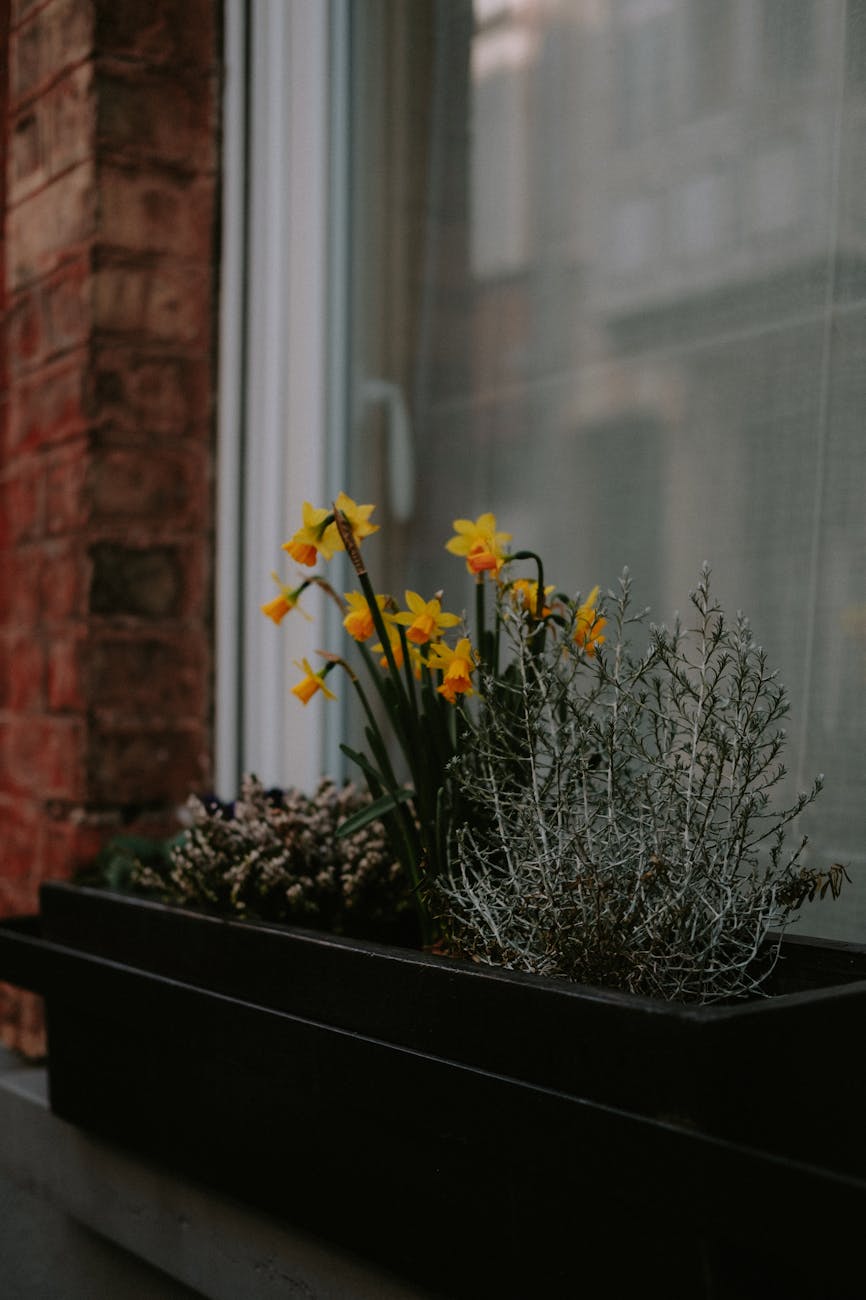
Mastering the Art of Space-Constrained Cultivation
The constraints of urban living often translate directly into limitations in gardening space. When dealing with a narrow window box gardening setup, the challenge shifts from managing large plots to optimizing every millimeter of available real estate. This isn’t just about fitting plants in; it’s about manipulating microclimates and resource distribution within an inherently restrictive environment. Successful cultivation here demands precision, specific plant selection, and a deep understanding of how roots interact with confined substrates.
Understanding the Physics of Narrow Container Gardening
A narrow window box functions less like a traditional garden bed and more like a carefully engineered ecosystem. The geometry dictates water retention, air circulation, and nutrient uptake. Water drains quickly from these shallow containers. This rapid drainage means that soil moisture levels fluctuate dramatically, often leading to rapid drying or saturation depending on the watering technique employed. Observing this dynamic is the first step toward success.
The limited volume also means that the root zone is highly susceptible to temperature swings. Heat radiates intensely off the container material, accelerating soil dehydration during hot spells. Conversely, in cooler conditions, moisture can become trapped and lead to root rot if not managed correctly. We must account for these physical realities when designing our planting strategy.
Selecting the Right Plants for Confined Spaces
Choosing what to grow is arguably more critical than choosing where to grow it. For narrow window boxes, plant choices must prioritize compact growth habits and efficient use of vertical space rather than sprawling horizontal coverage. Forget sprawling squash or large indeterminate tomatoes; those demand deep, expansive root systems that simply do not exist in these confines.
Consider herbs, compact lettuces, bush beans, and colorful microgreens. These varieties thrive when their growth is channeled upwards and inwards, maximizing photosynthetic potential within the tight boundaries. For example, certain varieties of cherry tomatoes or dwarf peppers can be successfully managed, provided they are given high-nitrogen feeding and excellent drainage management. The key is matching the plant’s inherent growth pattern to the physical constraints you possess.
Substrate Science: The Foundation for Success
The growing medium itself acts as the primary reservoir for water and nutrients. In narrow boxes, poor substrate choice has immediate, cascading effects on plant health. You cannot afford a dense, heavy soil mix that compacts easily or retains excess water unnecessarily.
Focusing on aeration and drainage is paramount. Mixing in materials that promote rapid water movement prevents the anaerobic conditions that foster root decay. When you select your amendments, prioritize components that enhance structure without adding unnecessary bulk. For instance, incorporating perlite or coarse sand into your mix helps maintain porosity. Understanding how these physical properties dictate root respiration allows for proactive management of container health. To truly elevate the potential harvest from small spaces, exploring Maximize Container Yields: Essential Soil Amendments for Urban Gardening offers concrete pathways for optimizing this foundational layer.
Optimizing Water and Nutrient Delivery Systems
Because water moves so quickly in narrow containers, passive watering methods often prove insufficient. You need a system that ensures consistent moisture delivery without over-saturating the roots. This necessitates moving beyond simple top-watering toward controlled delivery methods.
Implementing DIY Self-Watering Systems for Tiny Urban Containers provides an excellent framework for managing this precise level of hydration. These systems regulate water release, ensuring the soil stays within the optimal moisture tension zone for the plants, mitigating the risk of both drought stress and waterlogged conditions simultaneously. The mechanism behind self-watering is simple: setting a reservoir that slowly feeds the roots exactly as they need it, regardless of immediate surface dryness.
Nutrient delivery must be equally precise. Because the soil volume is small, nutrient depletion occurs faster than in larger beds. Plants in these confined spaces exhibit higher nutrient demands relative to their total biomass. This means that fertilization schedules must be more frequent and carefully titrated. Over-fertilization can lead to salt buildup in the limited space, poisoning the roots.
Managing Light Exposure in Urban Settings
Light is another critical, often overlooked, variable in narrow window box gardening. Sunlight intensity changes dramatically based on the orientation of the box relative to the building structure and surrounding objects. You must observe where direct sun hits throughout the day.
Plants need adequate light for photosynthesis. If a plant is shaded by an adjacent structure for several hours daily, its yield will suffer immediately. Analyzing shadows across the day allows you to strategically position plants—placing sun-loving varieties where they receive peak intensity and shade-tolerant varieties where light exposure is less intense. This analytical approach turns environmental limitations into manageable conditions.
The Cycle of Maintenance: Pest and Disease Control
When plants are closely packed in a narrow space, the risk of pest and disease transmission increases because air circulation—a key defense mechanism against many pathogens—is restricted. This creates an environment ripe for rapid infestation if not monitored constantly.
Regular, close inspection is non-negotiable. Look under the leaves often. Early detection of aphids or fungal spores allows you to intervene before an outbreak escalates. A healthy, well-aerated system is naturally more resistant. Maintaining good air flow by avoiding overcrowding and ensuring adequate soil porosity directly supports this natural defense mechanism against common urban pests.
Harvesting for Maximum Return
The final stage involves harvesting with intention. Because the space is limited, maximizing the yield per square inch becomes the primary goal. This means understanding the maturity timelines of your chosen compact varieties. Harvest frequently to encourage continuous production rather than waiting for a single, massive flush.
When you manage the substrate correctly, provide precise hydration, and select appropriately sized plants, the narrow window box transforms from a spatial limitation into an intensely productive micro-farm. It becomes a testament to intelligent gardening where every element—from the soil structure to the water delivery—is optimized for high output in minimal dimensions.
Tags: window box gardening, urban gardening, small space gardening, container gardening, balcony gardening, container gardening tips, vertical gardening
Featured Image by Mathias Reding on Pexels.